Introduction: Why Routine Matters More Than Any Single Product
You've probably tried this: bought an expensive shampoo marketed for hard water damage, used it consistently, and still saw disappointing results. So you switched to another brand. Then another. Maybe you added special conditioners, hair masks, or styling products. Each one promised to fix your dry, dull, coated hair, and each one eventually disappointed.
Here's what most people don't realize: the problem isn't finding the perfect product—it's using the wrong approach entirely.
Hard water creates a specific type of cumulative damage that a single product cannot address. The minerals deposit with every wash, creating layers of buildup that require systematic removal and prevention. This isn't like finding the right shampoo for oily hair or the right conditioner for dry ends. This is about building a complete routine that addresses mineral accumulation at every step.
Why changing shampoo alone doesn't work: If you're still washing with hard water multiple times per week, using products that don't remove minerals, and not conditioning appropriately after harsh treatments, no shampoo—no matter how expensive—can compensate for the flawed overall approach.
Why some people "tried everything" without success: They treated hard water damage like a product problem instead of a system problem. They kept looking for the magic formula instead of building the right routine.
The truth is straightforward but requires commitment: hard water damage needs a multi-step routine maintained consistently over weeks, not a miracle product used sporadically. This guide provides that routine—practical, affordable, and proven effective for people living in areas where water quality cannot be changed.
For understanding how hard water creates the specific damage this routine addresses, see How Hard Water Damages Hair (And Why It Feels Dry & Greasy at the Same Time).
Table of Contents
Step 1: Confirm You Actually Have Hard Water
Before investing time and money into a hard water routine, verify that hard water is actually your problem. Some symptoms overlap with other conditions, and treating the wrong issue wastes resources.
Quick Symptom Check
Your hair shows these signs:
- Feels coated or waxy even after shampooing
- Looks dull despite conditioning
- Products don't seem to absorb or work properly
- Texture has become rough or stiff
- Shampoo doesn't lather well
- Takes longer to dry than it used to
Your bathroom shows these signs:
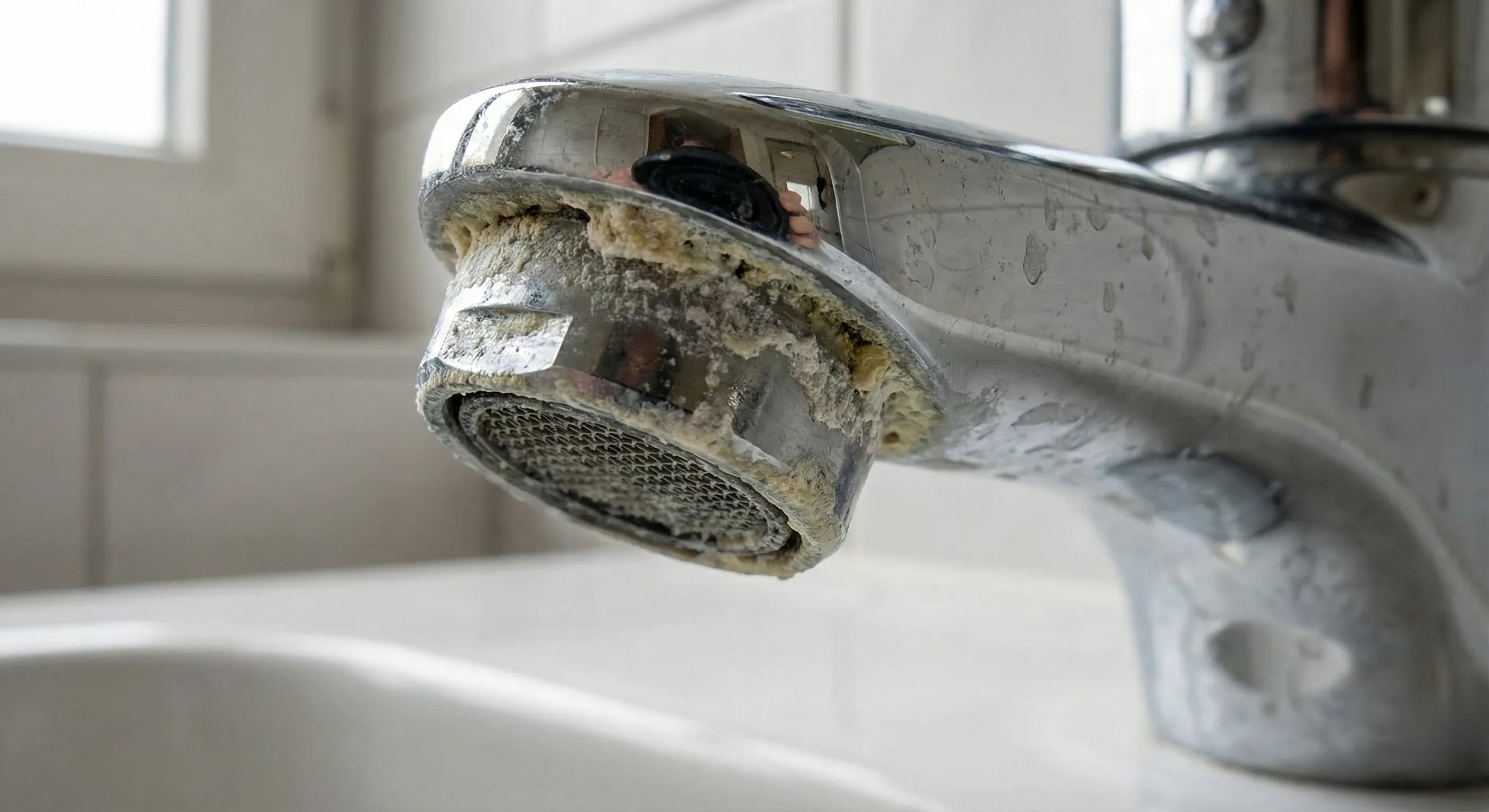
- White, chalky deposits on faucets and showerheads
- Cloudy film on glass shower doors that's hard to clean
- Ring around the bathtub at water level
- Soap doesn't rinse cleanly and leaves residue
Simple Home Testing
The soap test: Add a few drops of liquid soap to a clear container of tap water and shake vigorously. If the water turns cloudy and doesn't produce many suds, you have hard water. Soft water creates abundant, long-lasting foam.
Visual inspection: Fill a clear glass with tap water and let it sit overnight. Hard water often leaves white sediment at the bottom or creates a film on top.
Official testing: Purchase a water hardness test kit ($10-15 online or at hardware stores) for precise measurement in parts per million (ppm).
- 0-60 ppm: Soft
- 61-120 ppm: Moderately hard
- 121-180 ppm: Hard
- 181+ ppm: Very hard
Knowing your exact hardness level helps you adjust routine frequency and product choices appropriately.
Step 2: The Non-Negotiables (Foundation of Your Routine)
These two elements form the core of every successful hard water hair routine. Everything else is supplementary—these are essential.
Chelating Shampoo (Once Every 7-14 Days)
Why you cannot skip this: Regular shampoos, no matter how "clarifying" or "deep cleansing," use surfactants that dissolve oils. Hard water deposits are minerals chemically bonded to hair proteins—oil-dissolving agents cannot remove them. Only chelating agents (EDTA, phytic acid, citric acid in higher concentrations) can break these mineral-to-protein bonds.
What chelating actually does: Chelating agents form stable complexes with calcium, magnesium, iron, and copper ions, pulling them away from hair and allowing them to be rinsed away. This is specific chemistry that regular cleansing cannot replicate.
Frequency based on water hardness:
- Soft water (0-60 ppm): Monthly or only after exposure to hard water elsewhere
- Moderately hard (61-120 ppm): Every 10-14 days
- Hard (121-180 ppm): Every 7-10 days
- Very hard (181+ ppm): Every 5-7 days
Application technique matters:
- Wet hair thoroughly with warm water
- Apply chelating shampoo directly to scalp first
- Massage for 1-2 minutes (contact time is crucial)
- Work through lengths gently
- Leave on for additional 1-2 minutes before rinsing
- Rinse thoroughly—chelating agents need complete removal
Why timing is critical: Too infrequent allows excessive buildup that becomes harder to remove. Too frequent strips protective oils and can over-dry hair. Find your maintenance frequency and stay consistent.
Gentle Regular Shampoo (Between Chelating Washes)
Why you can't use chelating shampoo exclusively: Chelating agents, while essential for mineral removal, are too aggressive for daily or frequent use. They remove protective coating along with minerals, and overuse leads to dry, brittle, damaged hair.
Purpose of regular shampoo: Handle routine cleansing—removing oils, dirt, and daily buildup—between chelating treatments. This maintains cleanliness without the intensive treatment every wash.
What to look for:
- Gentle surfactants (avoid harsh sulfates if hair is already damaged)
- No heavy silicones that create their own buildup
- Moisturizing ingredients if hair is dry
- Volumizing formulas if hair is fine or flat
Step 3: Conditioning Strategy (Where Most People Go Wrong)
Conditioning in hard water requires completely different strategy than in soft water. The same approaches that work for most people will fail in hard water areas, and understanding why prevents frustration.
After Every Chelating Wash: Deep Conditioning Is Mandatory
Why this is non-negotiable: Chelating shampoos remove the mineral coating but also strip protective layers. Your hair is maximally clean but also maximally vulnerable immediately after chelating. Without intensive conditioning, you leave hair unprotected and prone to damage.
This is the optimal treatment window: With minerals removed, conditioning ingredients can actually penetrate the hair shaft. This is when deep conditioning, protein treatments, and intensive moisture work at full effectiveness—the barrier that blocked them is temporarily gone.
Application technique:
- After thoroughly rinsing chelating shampoo, squeeze excess water
- Apply generous amount of deep conditioner or mask from mid-lengths to ends
- Avoid roots unless scalp is extremely dry (prevents greasiness)
- Leave on minimum 3-5 minutes, longer if possible (10+ minutes for very damaged hair)
- Rinse with cool water to seal cuticle
Between Chelating Washes: Light and Strategic
Different rules apply: On non-chelating wash days, you're dealing with mineral coating that blocks product absorption. Heavy conditioning creates buildup on top of minerals, making hair feel greasy and weighted without actually improving condition.
Strategy for between washes:
- Use lightweight conditioners or rinse-out formulas
- Apply only to ends, nowhere near scalp or roots
- Rinse extremely thoroughly—residue combines with minerals to worsen coating
- Consider conditioning every other wash instead of every wash if hair feels heavy
Step 4: Washing Frequency (Less Is Actually More)
One of the hardest adjustments for people dealing with hard water is reducing how often they wash. It seems counterintuitive—hair feels coated and greasy, so shouldn't you wash more? The answer is no, and understanding why changes everything.
Why Frequent Washing Makes Hard Water Damage Worse
Every wash deposits more minerals. Even with chelating shampoo, you're exposing hair to hard water during rinsing. The more frequently you wash, the more mineral exposure you accumulate between chelating treatments.
Your scalp overcompensates. When you strip oils frequently, your scalp produces more oil to protect itself. This creates a cycle: wash because hair is greasy → strip natural oils → scalp produces excess oil → hair looks greasy faster → wash again sooner. Breaking this cycle requires extending time between washes so your scalp can recalibrate.
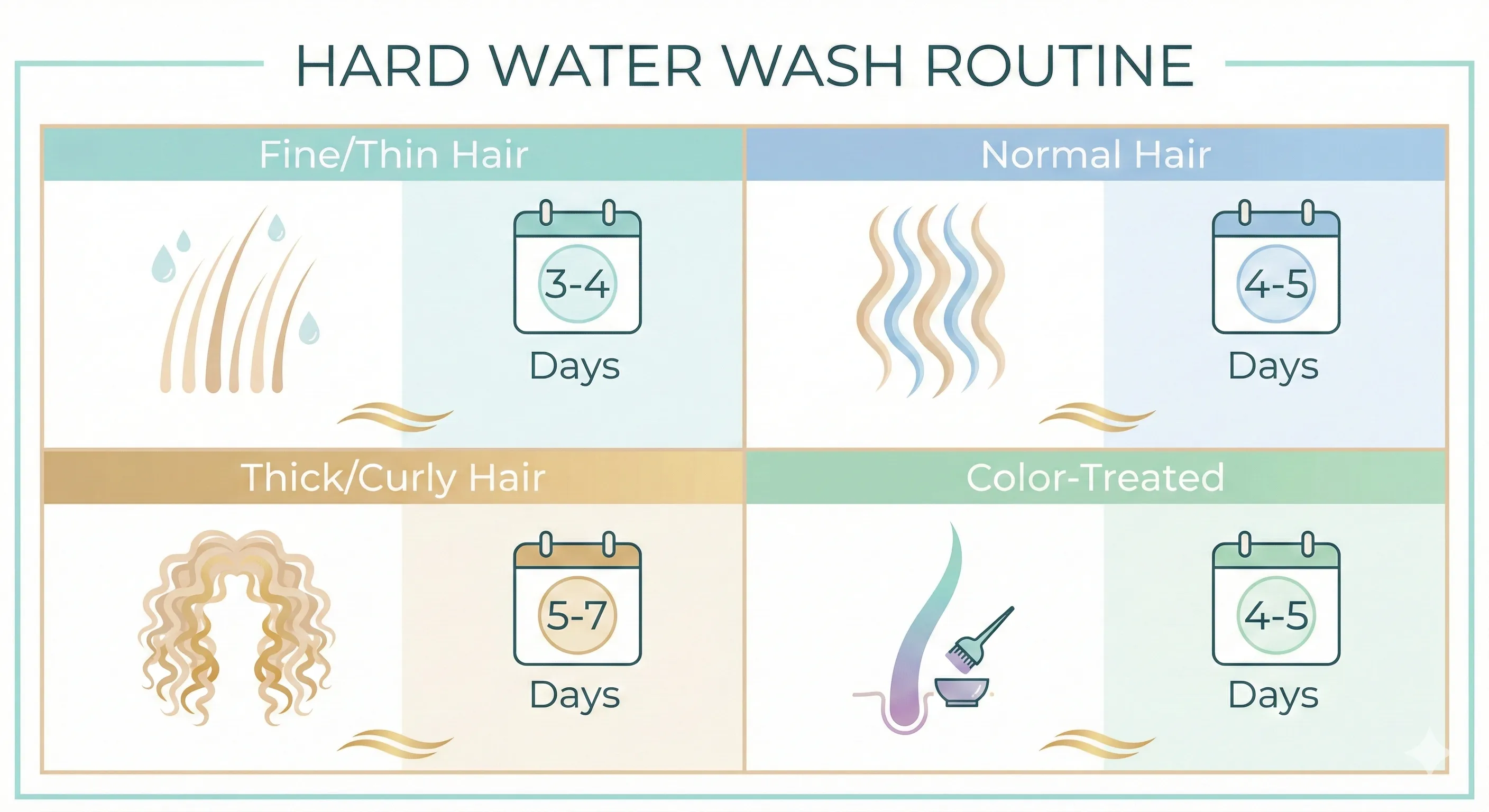
Frequency Guidelines by Hair Type
- Fine or thin hair: Every 3-4 days (Dry shampoo at roots, focused conditioning on ends only)
- Normal hair: Every 4-5 days (Easiest hair type to manage with reduced washing)
- Thick, coarse, or curly hair: Every 5-7 days (Natural oils essential for texture definition)
- Color-treated or chemically processed hair: Every 4-5 days minimum (Balance between mineral removal and color preservation)
Surviving the Transition Period
Weeks 1-2: Hardest period. Hair will feel greasier than you're comfortable with as you extend time between washes. Your scalp is still overproducing oil from previous frequent washing.
Weeks 3-4: Noticeable improvement. Scalp begins producing less oil as it adapts to new routine. Hair stays cleaner-looking longer.
Weeks 5-8: New normal established. You can comfortably go your target number of days between washes without excessive greasiness.
Remember this discomfort is temporary and leads to much better long-term results.
Step 5: Water Management (When Possible)
While not everyone can modify their water supply, these strategies reduce mineral exposure when feasible.
Shower Filters: Realistic Expectations
What shower filters actually do: Remove chlorine effectively (90%+), reduce heavy metals, and reduce calcium/magnesium by 30-50% maximum.
When filters aren't enough: Very hard water (>200 ppm) leaves significant hardness even after filtration. Maintenance is critical—mark your calendar to replace filter cartridges every 3-6 months.
Distilled Water Final Rinse: Affordable Game-Changer
This simple hack provides disproportionate benefit for minimal cost and effort.
How it works: After completing your normal washing and conditioning with tap water, pour distilled water over your hair as the absolute final step. Don't rinse the distilled water out—let it be the last thing on your hair before drying.
Why this helps: Distilled water contains zero minerals. Using it for the final rinse removes residual hard water from your hair before it can dry and deposit additional minerals. Your hair dries with significantly less new coating.
Routines by Hair Type
While the core steps apply to everyone in hard water areas, specific hair types need customized approaches.
Fine Hair
Special challenges: Shows mineral weight and greasiness most dramatically. Loses volume easily.
Adjustments: Chelating shampoo every 7-10 days. Volumizing regular shampoo between treatments. Lightweight conditioner on ends only—skip mid-lengths if they show buildup.
Curly and Textured Hair
Special challenges: Minerals disrupt curl pattern severely. Naturally more porous, absorbs minerals faster.
Adjustments: Chelating every 7 days (curl definition depends on mineral-free hair). Gentle, sulfate-free regular cleansing. Deep conditioning after every chelating treatment is absolutely essential.
Color-Treated Hair
Special challenges: Color fades faster due to mineral interference. Minerals create brassiness especially in blonde/light hair.
Adjustments: Gentler chelating formulas (color-safe). Chelating frequency might be slightly less (every 10-14 days). Color-depositing conditioners between chelating treatments.
What to Stop Doing (Common Mistakes)
These well-intentioned approaches actually worsen hard water damage or prevent improvement.
- Excessive Clarifying: Clarifying shampoos remove oils but cannot remove bonded minerals. You're over-stripping without addressing the actual problem.
- Daily ACV Rinses: ACV adjusts pH but cannot remove bonded minerals. Daily acidic exposure can weaken protein bonds over time.
- Constant Product Switching: Hard water damage accumulated over months. Reversal takes weeks. Switching products prevents you from assessing what actually works.
- Confusing Oily Scalp With Mineral Buildup: The coating causes oil to concentrate at roots while lengths stay dry. Harsh cleansing makes your scalp produce more oil, worsening the problem.
Expected Timeline (Realistic Recovery)
Weeks 1-2: Initial Adjustment. Immediate improvement after first chelating treatment, but possible increased greasiness as you reduce washing frequency.
Weeks 3-4: Visible Progress. Hair stays clean-looking longer. Products seem to work better. Frizz decreases, shine improves.
Weeks 5-8: New Normal Established. Hair behavior is predictable. You've found comfortable rhythm for washing frequency. Buildup doesn't return as quickly.
Your Hard Water Survival Kit
These essentials form the complete toolkit for managing hard water hair effectively:
- ✅ Chelating Shampoo (with EDTA, phytic acid, or citric acid)
- ✅ Gentle Regular Shampoo (sulfate-free or mild sulfates)
- ✅ Deep Conditioner or Mask (moisture and protein)
- ✅ Lightweight Conditioner (for between washes)
- ✅ Shower Filter (KDF and multi-stage if possible)
- ✅ Jug of Distilled Water (1 gallon)
- ✅ Water Hardness Test Kit (optional but helpful)
Frequently Asked Questions
Conclusion: Stop Looking for Perfection
Your hair in a hard water area will never behave exactly like hair washed in soft water. That's not the goal, and pursuing perfection leads to frustration.
The goal is improvement: healthy hair that grows properly, feels manageable, and doesn't break excessively. This is absolutely achievable with the right routine.
This routine works. Thousands of people living in hard water areas use variations of these steps successfully. Give it 4-6 weeks of consistency before judging results. Trust the process, adjust as needed for your specific hair, and celebrate progress rather than chasing perfection.