If shaving leaves you with acne, razor bumps, or painful ingrown hairs, your shaver might be the problem — not your skin.
The wrong electric razor can trap bacteria in its cutting head, pull hairs below the skin surface, and transfer contamination from one pore to the next. Every shave in that condition is an active cause of the breakouts you're trying to avoid.
This guide breaks down the electric shavers that are mechanically built to reduce that cycle — and explains exactly why each one works for acne-prone and ingrown hair-prone skin, not just which ones are popular online.
🏆 Quick Picks — Best Shavers for Acne & Ingrown Hair
- Best for active acne: Philips Norelco OneBlade
- Best for ingrown hairs (coarse/curly hair): Bevel Electric Shaver
- Best hypoallergenic option: Andis ProFoil Lithium Titanium
- Best for dense beards: Wahl Professional 5-Star Balding Clipper
👉 Don't want to read the full guide? These are the safest choices based on your skin type.
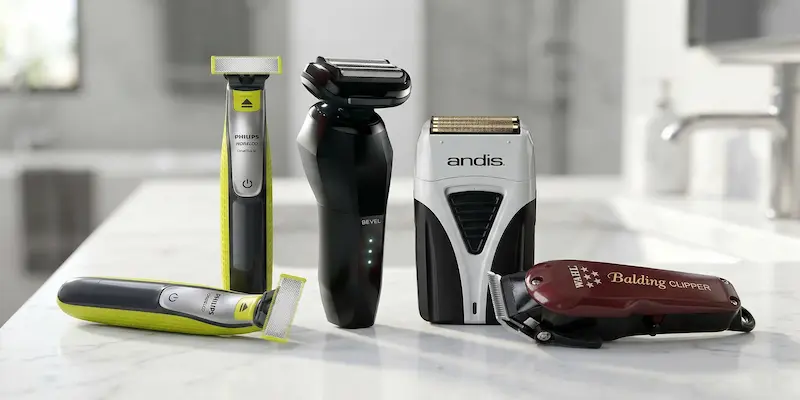
Table of Contents
- Quick Answer: Best Shaver for Acne
- What Causes Acne and Ingrown Hairs When Shaving?
- What to Look for in a Shaver for Acne-Prone Skin
- Best Electric Shavers — Top 4 Picks
- Side-by-Side Comparison
- Foil vs. Rotary for Razor Bumps
- How to Shave Over Active Breakouts
- How to Prevent Acne and Ingrown Hairs
- Common Mistakes That Make Things Worse
- Frequently Asked Questions
What Is the Best Electric Shaver for Acne (Quick Answer)
If you have active acne, the safest option is a shaver that doesn't cut at skin level — like the OneBlade. It maintains a safe micrometric distance from the skin, preventing direct blade-to-lesion contact.
If ingrown hairs are your main issue, a surface-level cutting tool like the Wahl 5-Star reduces hair from curling back into the skin by never cutting below the skin line.
For most people, a gentle foil shaver with proper cleaning gives the best balance — less friction than rotary, predictable cutting depth, and easy hygiene maintenance.
What Causes Acne and Ingrown Hairs When Shaving?
Understanding the cause is what lets you choose the right tool. Shaving-related acne and ingrown hairs come from four overlapping mechanisms:
- Bacteria transfer — a dirty shaver head presses microbial buildup directly into follicles opened by the shaving motion. This triggers the pus-filled inflammatory response that looks like acne but is technically an acneiform reaction caused by the shave.
- Dull blades — instead of cutting hair cleanly, worn blades drag and tug, creating micro-tears in the skin barrier. Each tear is a bacterial entry point and an irritation trigger.
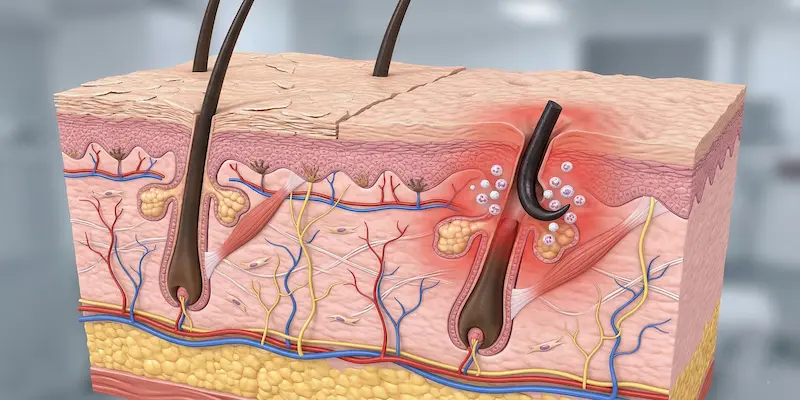
- Cutting below skin level — blades that cut hair below the skin surface leave a tip that can curl back into the follicle instead of growing outward. That's the origin of pseudofolliculitis barbae — the clinical term for shaving bumps — which is particularly common in men with coarse, curly hair.
- Friction and excessive pressure — pressing too hard with any shaver increases mechanical stress on follicle walls, creating the inflammation that feeds both acne and ingrown hair formation.
What to Look for in a Shaver for Acne-Prone Skin
Not every 'sensitive skin' shaver on the market is actually built differently. These are the features that make a mechanical difference for acne and ingrown hair specifically:
Foil System Over Rotary
Foil shavers use a linear oscillating blade covered by a thin mesh screen. The foil creates a consistent separation between the blade and your skin — less direct contact, less friction, and less follicle disruption per stroke. For acne-prone skin, this controlled cutting motion is more predictable and less likely to create the irritation that feeds breakouts.
Rotary shavers use circular blade discs that cut in a sweeping motion — better for contouring but with more blade-to-skin contact per area. On very reactive skin, this additional contact frequency tips the balance toward irritation.
Hypoallergenic Foil or Blade Coating
Standard stainless steel foils contain nickel, and a meaningful percentage of people with acne-prone skin also have contact sensitivity to nickel. That sensitivity shows up as an inflammatory reaction wherever the foil presses against skin — which looks like and gets treated as acne, but is actually a metal contact dermatitis. Titanium-coated or specifically labelled hypoallergenic foils eliminate this trigger entirely.
Wet & Dry Capability
Wet shaving — with a non-comedogenic pre-shave foam or gel — creates a lubricating barrier between the foil and the skin. For acne-prone skin this reduces friction, and the right foam can also have mild antibacterial properties. A shaver rated for wet use (IPX7 waterproof) gives you this option without voiding the warranty.
Easy-Access Cleaning
Blade hygiene is not optional for acne-prone skin — it's the primary variable. A shaver that's hard to fully disassemble and clean will consistently have bacterial buildup inside the head, regardless of how careful you are about quick rinsing. Look for models where the foil frame and blade block remove completely with one motion and rinse under running water.
Flexible Head Design
A pivoting or multi-flex head adapts to facial contours without requiring you to press the shaver harder in curved areas. Less user-applied pressure means less follicle compression and fewer micro-tears — directly reducing both acne and ingrown hair triggers.
| Feature | Why It Matters for Acne & Ingrown Hairs |
|---|---|
| Foil system | Linear cutting reduces friction and direct blade-to-skin contact |
| Hypoallergenic blades | Prevents nickel contact reaction that mimics acne |
| Wet shaving support | Non-comedogenic foam creates barrier, reduces irritation |
| Full disassembly cleaning | Prevents bacterial buildup — the #1 cause of post-shave breakouts |
| Flexible / pivoting head | Reduces pressure in curved areas — fewer micro-tears |
| Cuts at skin level (not below) | Prevents pseudofolliculitis barbae in curly/coarse beard types |
Best Electric Shavers for Acne & Ingrown Hairs — Top 4 Picks
These four shavers are chosen for mechanical reasons that directly address acne and ingrown hair formation — not just for general 'sensitive skin' marketing claims.
As an Amazon Associate, we earn from qualifying purchases.
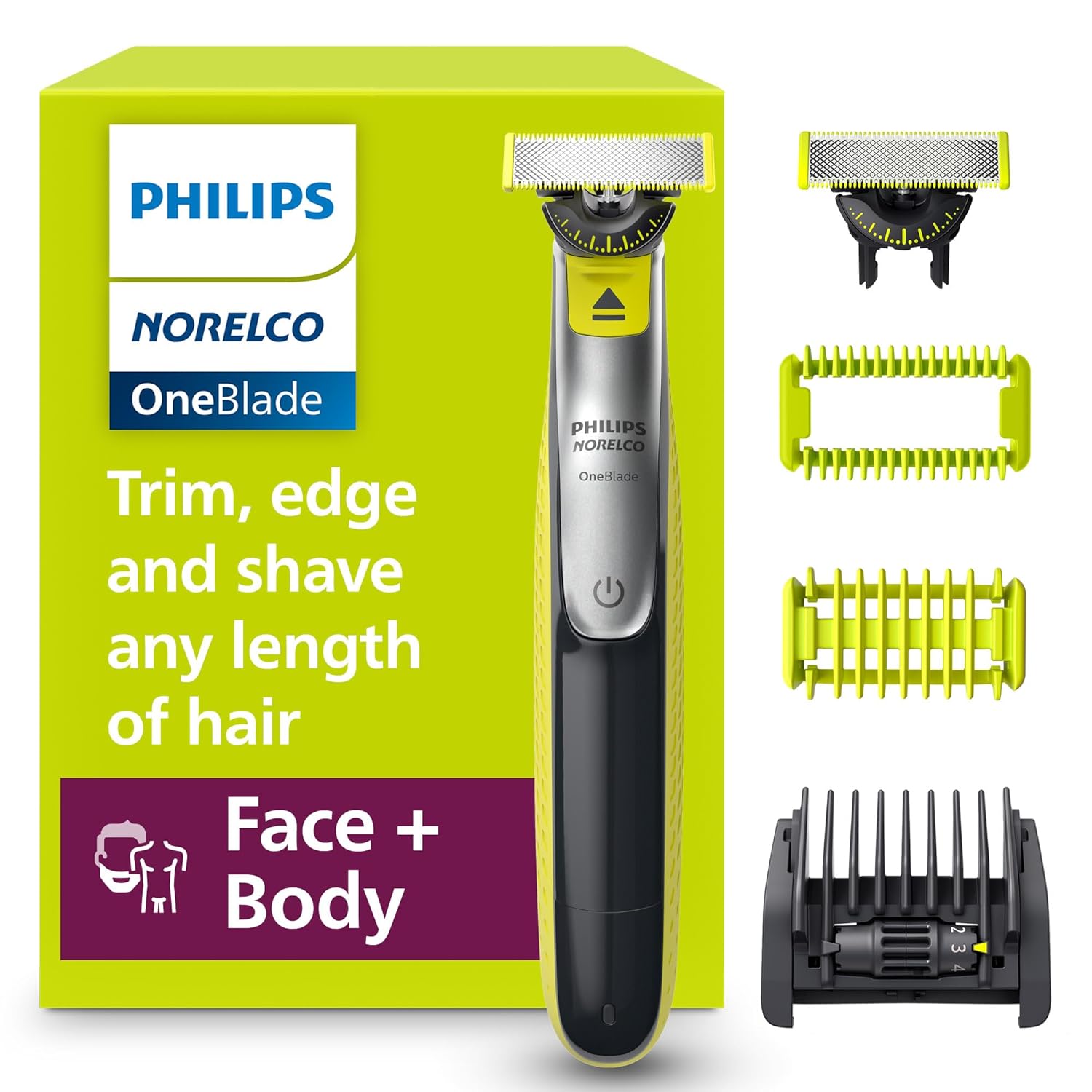
OneBlade Electric Shaver
Does not cut at absolute zero-gap — the blade sits at a safe micrometric distance from skin, preventing direct blade-to-lesion contact. Protects active pimples from being cut or opened, stopping the bacterial spread that follows.
✅ Bottom Line: The absolute best choice if you have active acne, pimples, or whiteheads and need a safe shave without spreading bacteria or causing bleeding.
❌ Avoid if: You want a super close finish — it leaves a microscopic bit of stubble to protect the skin.
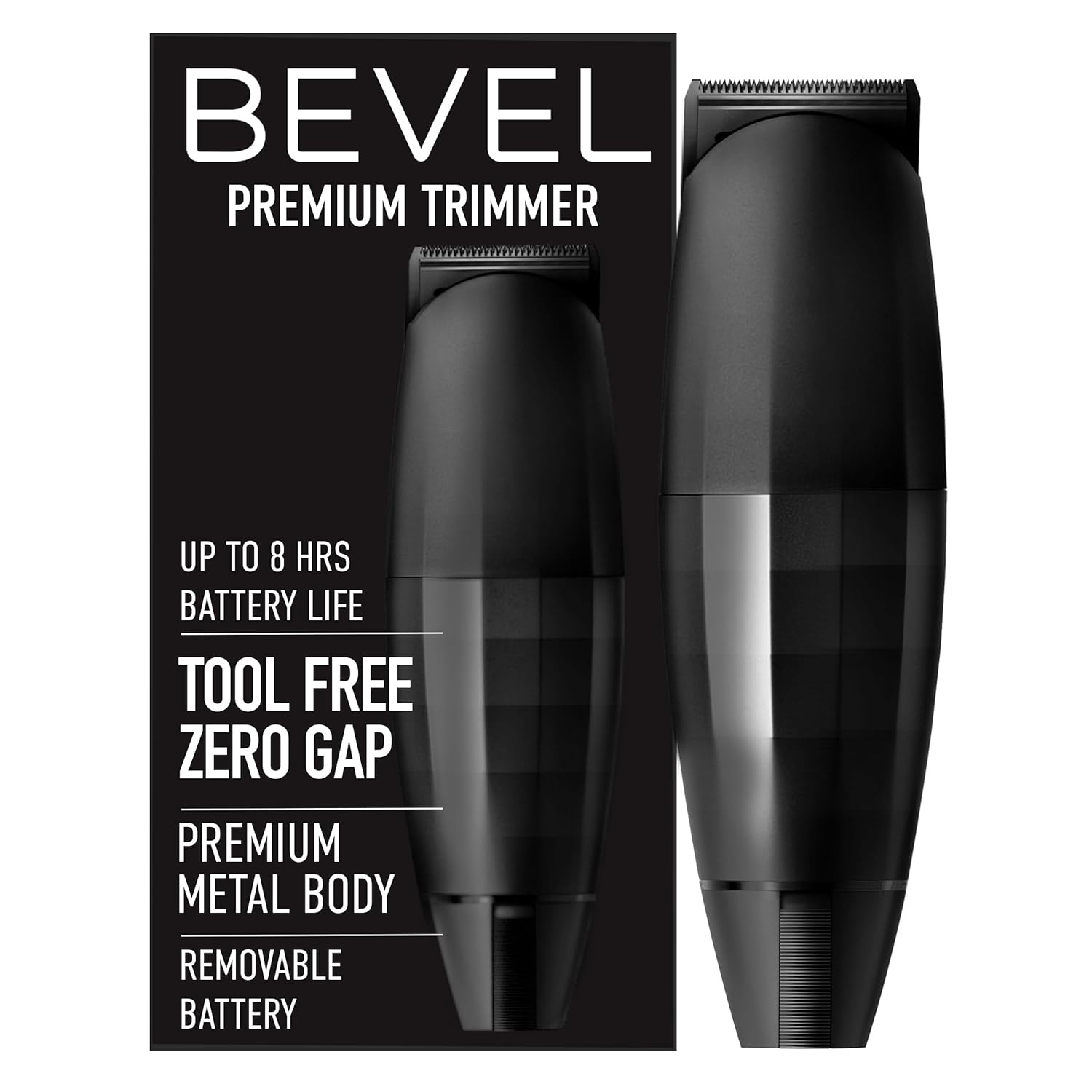
Beard Trimmer for Men
Engineered specifically for tightly coiled, coarse beard hair. The blade geometry and foil angle are calibrated for hair that grows in curves — preventing the sideways pull that causes ingrown hairs in coarse beard types.
✅ Bottom Line: The ultimate targeted solution for men with coarse, tightly coiled hair suffering from chronic razor bumps.
❌ Avoid if: You have fine, straight facial hair — you won't need to pay a premium for this specialized blade geometry.
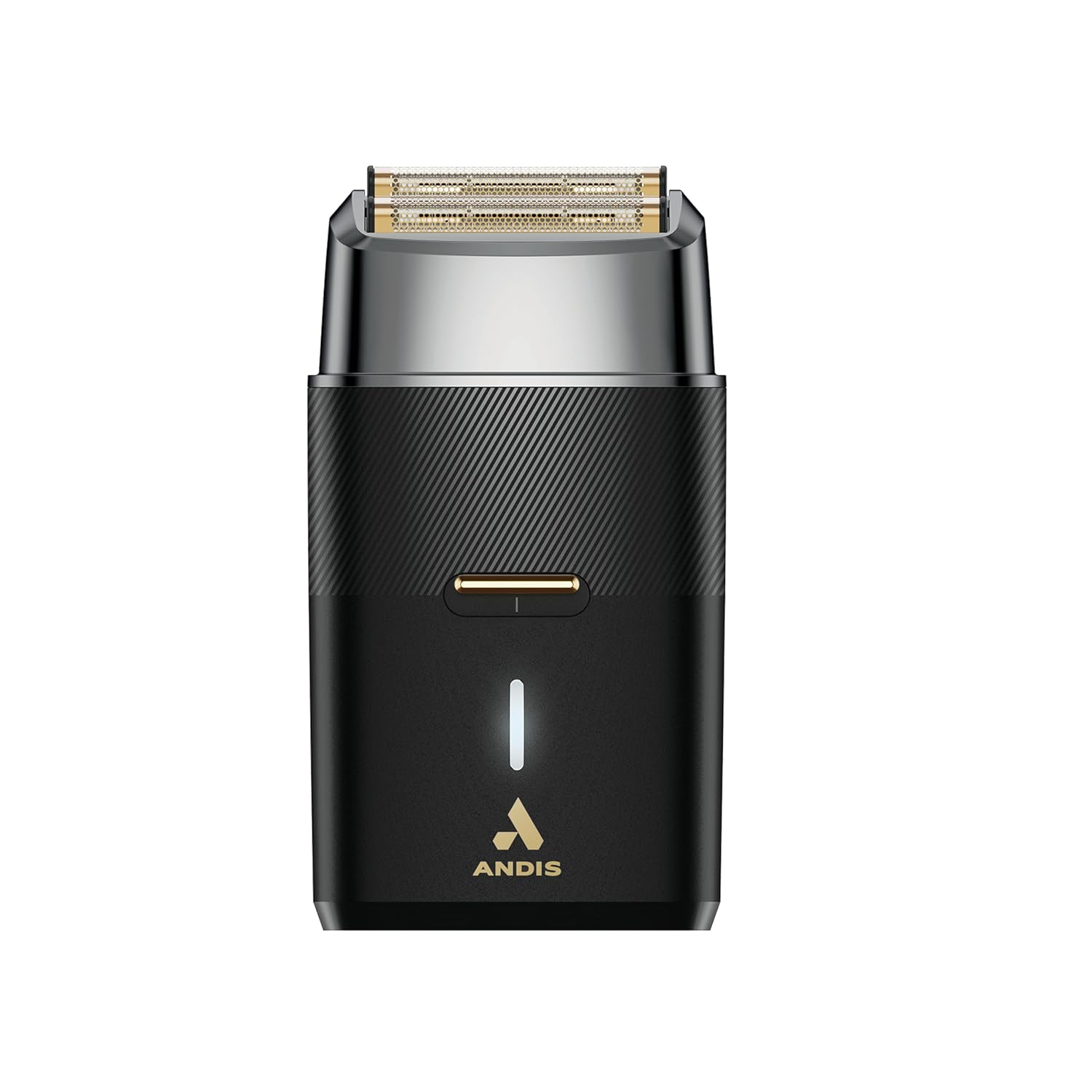
563616 Pro Foil Plus — Lithium Titanium
Gold titanium foil construction. Titanium is hypoallergenic, non-porous, and has demonstrated antimicrobial surface properties — eliminating the nickel contact reaction that causes breakouts wherever the foil touches skin.
✅ Bottom Line: The perfect fix if your skin reacts poorly to standard razors — hypoallergenic foils stop metal-induced allergic breakouts entirely.
❌ Avoid if: You need to shave a thick multi-day beard — this is a finishing shaver for daily stubble.
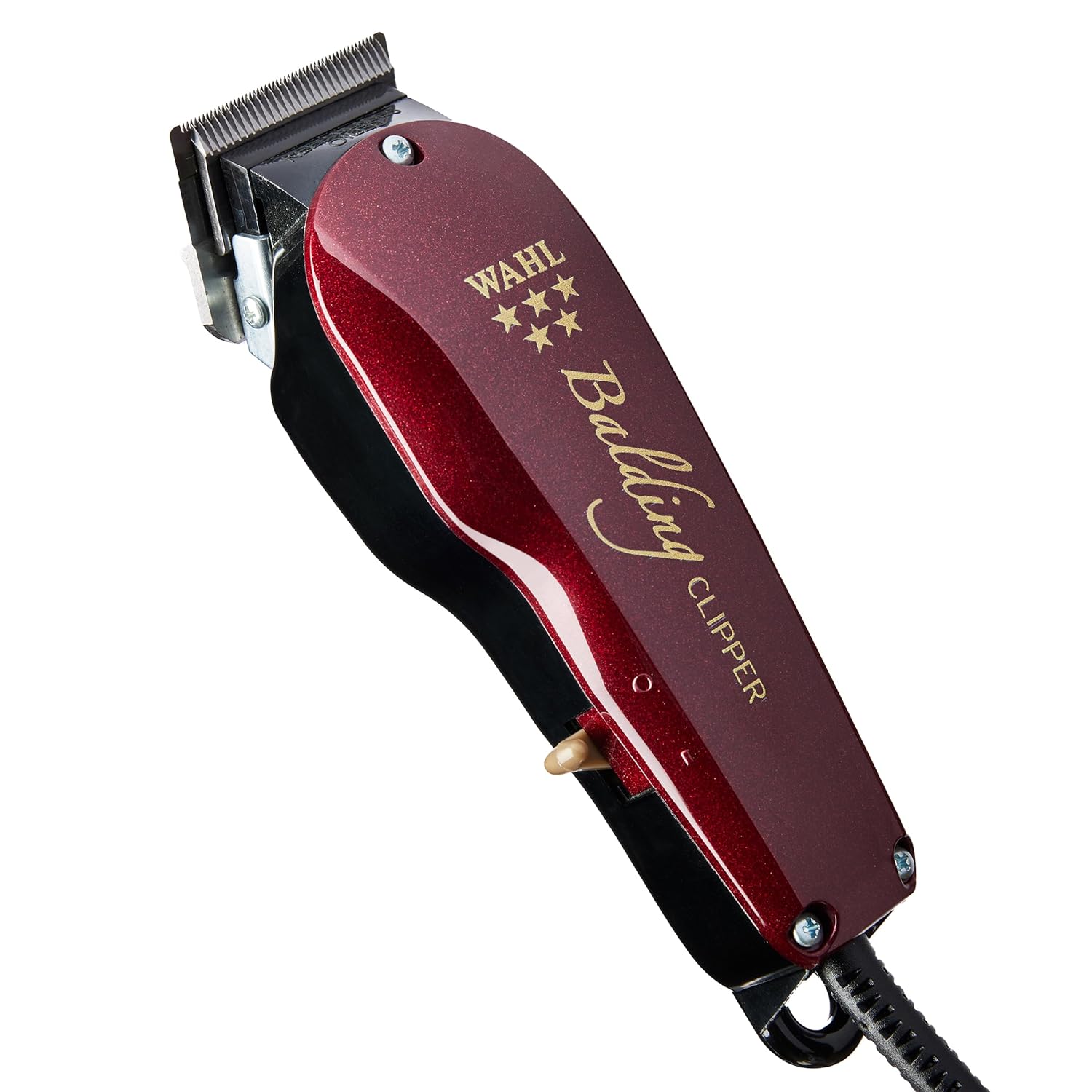
5-Star Balding Clipper
Precision cutting geometry that clips hair at skin surface without dipping below — explicitly avoiding the zero-gap depth that pulls hair tips under the skin line and causes ingrown hairs to form.
✅ Bottom Line: A professional-grade barber secret for completely stopping ingrown hairs — it physically cannot cut hair below the skin level.
❌ Avoid if: You want a waterproof wet & dry shaver, or prefer the cushioned glide of a consumer foil shaver.
Side-by-Side Comparison
| Shaver | Best For | Mechanical Advantage | Problem It Solves |
|---|---|---|---|
| Philips Norelco OneBlade | Active acne / live breakouts | Zero-gap bypass — safe micrometric distance from skin | Prevents cutting and spreading active pimples |
| Bevel Electric Shaver | Coarse / curly beard (Type 3–4) | Blade geometry engineered for tightly coiled hair | Prevents pseudofolliculitis barbae (shaving bumps) |
| Andis ProFoil Lithium Titanium | Nickel sensitivity / metal allergy | Hypoallergenic gold titanium foil — antimicrobial surface | Eliminates nickel contact dermatitis + reduces bacterial buildup |
| Wahl 5-Star Balding Clipper | Chronic ingrown hairs / dense beards | Precision cut at skin level — no below-surface depth | Prevents hair tip curling back into follicle (ingrown origin) |
| Skin Problem | Best Shaver Type |
|---|---|
| Active acne | OneBlade (no direct skin contact) |
| Ingrown hair — straight beard | Surface-level clipper (Wahl 5-Star) |
| Ingrown hair — coarse/curly beard | Bevel (geometry calibrated for coarse hair) |
| Metal / nickel sensitivity | Andis ProFoil Titanium |
| General sensitive skin | Any quality foil shaver with clean blades |
Foil vs. Rotary Shaver for Razor Bumps — Which Is Safer?
The short answer for acne and ingrown hair: foil shavers are consistently safer for reactive skin. Here's the mechanical reason.
| Foil Shaver | Rotary Shaver | |
|---|---|---|
| Cutting motion | Linear oscillation — predictable, controlled | Circular sweeping — multi-directional |
| Blade-to-skin contact | Foil mesh as buffer — indirect contact | More direct blade contact per area |
| Acne safety | High — less follicle disruption per stroke | Medium — increased friction on reactive skin |
| Ingrown hair risk | Low — cuts at surface level | Medium — circular motion can catch and pull curly hair |
| Irritation level | Low (with clean blades and light pressure) | Medium — higher friction baseline |
| Best for coarse/curly hair | Moderate — some models struggle with dense growth | Better — multi-direction motion handles curves |
How to Shave Over Active Breakouts With an Electric Razor
Most guides say 'don't shave over pimples.' That's practical advice for manual razors where the blade cuts the lesion open. With the right electric shaver, careful technique makes shaving during a breakout manageable without significantly worsening it.
- Use the OneBlade or equivalent non-zero-gap tool — standard foil shavers can still catch the edge of a raised lesion if pressed hard enough.
- Do not press down on active breakouts. Let the shaver hover at the surface without pressure. If the lesion is raised enough to catch, shave around it rather than over it.
- Disinfect the shaver head before the session, not just after. Starting with a clean blade prevents cross-contamination — the transfer of bacteria from one infected follicle to surrounding pores via the shaving motion.
- Use a non-comedogenic pre-shave — a foam or gel that explicitly does not clog pores. Standard shaving foams often contain comedogenic oils that worsen acne on already reactive skin.
- Apply an alcohol-free, fragrance-free post-shave balm immediately after. Avoid anything with alcohol, menthol, or fragrance — all three are skin barrier irritants that worsen the inflammatory response in active acne.
How to Prevent Acne and Ingrown Hairs When Using an Electric Shaver
1 Clean the Shaver After Every Use
For acne-prone skin, cleaning frequency is not optional. Bacterial buildup inside a shaver head accumulates within 24–48 hours of a shave. Rinsing with water is not sufficient — you need an alcohol spray on the foil at minimum twice per week, and a full disassembly clean once weekly.
2 Use Light Pressure and Shave With the Grain
On acne-prone skin, especially the neck, shaving against the grain on the first pass is almost always counterproductive. The closer result is not worth the follicle disruption. Shave with the grain first, assess the result, and only make a second pass against the grain if the skin has handled the first one well.
3 Shave in the Right Direction for Your Hair Type
For straight beard hair, with-the-grain first pass is almost always downward on the face and upward on the neck. For coarse, curly hair, the 'grain' is more complex — the Bevel and similar tools designed for coarse hair include guidance on the optimal shaving pattern for reducing ingrown formation.
4 Avoid Over-Shaving the Same Area
Each additional pass over the same skin zone multiplies friction and follicle disruption. Two clean passes should be the maximum for acne-prone skin. If the result isn't close enough after two passes, the issue is blade sharpness, not technique — clean or replace the head.
Common Shaving Mistakes That Make Acne and Ingrown Hairs Worse
- Dirty shaver — the single highest-impact mistake. A shaver not cleaned with alcohol spray is a bacterial delivery mechanism to open follicles, regardless of how careful everything else is.
- Dull blades — worn blades drag rather than cut. The friction creates micro-tears that are both direct irritation triggers and bacterial entry points. Most people wait too long to replace the blade block — 12–14 months in hard water areas, 14–18 months in soft water areas.
- Dry shaving without any prep — for acne-prone skin, shaving on completely bare, unprepared skin increases foil friction and follicle compression. A light non-comedogenic pre-shave powder or oil changes the friction profile significantly.
- Using comedogenic aftershave — alcohol-based and fragrance-heavy aftershaves are bad for acne-prone skin post-shave. They strip the skin barrier, create micro-inflammation, and leave pores more susceptible to the next session's bacterial contact.
- Sharing shavers — cross-contamination between people is a direct acne trigger. A shaver used by someone else introduces their bacterial flora to your follicles. Even between family members this is a meaningful acne cause that gets overlooked.
Frequently Asked Questions
An electric shaver itself doesn't cause acne — but a dirty shaver head absolutely can. The distinction matters: the shaving action opens follicles slightly, and if the foil is carrying bacterial buildup from previous shaves, that bacteria gets introduced directly to those open follicles. The result is an acneiform breakout that looks identical to acne but is caused by hygiene rather than hormones. It resolves within days once you address the shaver cleanliness — unlike hormonal acne which follows longer cycles. The fix is alcohol spray cleaning twice weekly and a full disassembly clean weekly.
For most acne-prone skin types, yes. The foil's mesh screen creates a physical buffer between the blade and your skin, resulting in less direct contact and lower friction per stroke. The linear cutting motion is also more predictable, which means less variability in how much follicle disruption occurs across different areas. The exception is very coarse or tightly curly beard hair — in this case, a standard foil shaver may miss hairs and require extra passes, which adds the friction it was supposed to reduce. The Bevel shaver was engineered specifically for this combination of skin sensitivity and coarse hair texture.
For acne-prone skin: quick rinse under water after every shave; alcohol spray on the foil at minimum every other shave; full disassembly clean with warm water and mild soap once weekly; vinegar soak once per month if you're in a hard water area. The monthly vinegar soak is specific to hard water households — calcium deposits inside the foil create a rough surface that bacterial colonies attach to much more easily than a smooth, clean foil. Most shaving-related acne that doesn't respond to other interventions improves significantly once this cleaning schedule is established.
Electric shavers significantly reduce ingrown hair frequency compared to multi-blade razors, but they don't eliminate it entirely. The primary mechanism: most electric shavers cut hair at skin level rather than below it, so the hair tip doesn't get trapped below the surface to curl back into the follicle. The residual ingrown hair rate with electric shavers comes from flat-lying hairs, excessive shaving pressure, and dull blades that pull hair before cutting it. Addressing those three variables — foil choice, technique, and blade maintenance — gets most people to a near-zero ingrown hair rate.
A foil electric shaver or a zero-gap adjustable clipper (like the Wahl Balding Clipper) is highly recommended. These tools cut the hair cleanly at the skin's surface without dipping below the epidermis, preventing the hair from curling back into the follicle and causing ingrown hairs.