The neck is where shaving goes wrong for most people. Not the cheeks. Not the jaw. The neck.
It doesn't matter how good your shaver is on the rest of your face — the neck has different rules. The skin is thinner, the hair grows in multiple directions, and the contours around the Adam's apple make consistent technique genuinely difficult. Most people compensate by pressing harder. That's the mistake that causes everything else.
This guide covers the electric shavers that are actually built for neck shaving — not just good all-rounders that happen to work there. Each pick is chosen for a specific mechanical reason tied to the neck's real challenges.
🏆 Quick Picks — Best Shavers for Neck Irritation
- Best for Adam's Apple & sharp contours: Philips Norelco OneBlade
- Best for flat-lying neck hairs: Braun Series 9 Pro
- Best for neck whorls & random growth: Philips Norelco i9000
- Best for thick / dense neck hair: Panasonic Arc5
- Best for coarse/curly hair & neckline: Bevel Electric Shaver
👉 Each pick solves a different neck problem — match it to your specific issue below.
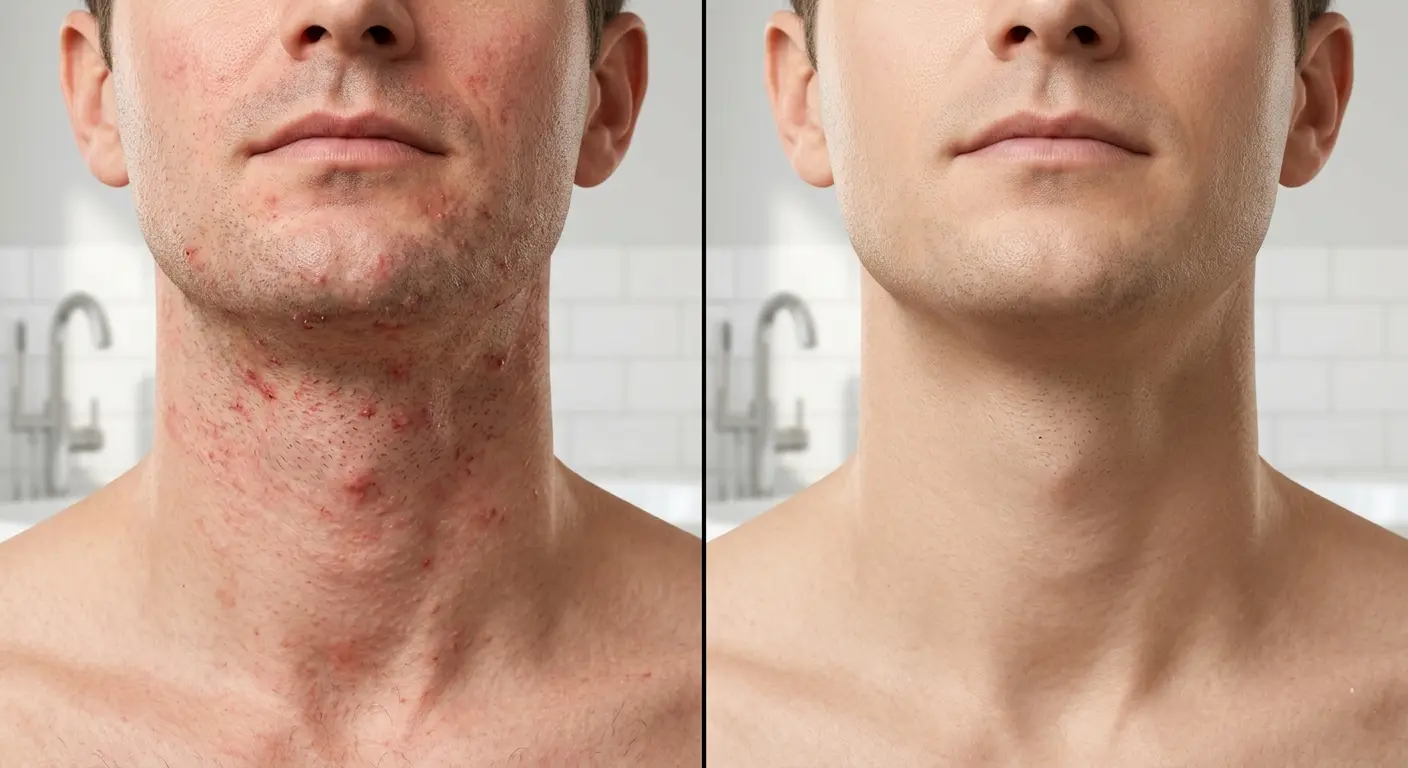
Table of Contents
- Why Neck Shaving Causes Irritation, Bumps & Whiteheads
- What to Look for in an Electric Razor for Neck Hair
- Best Electric Shavers for Neck — Top 5 Picks
- Quick Comparison Table
- Foil vs. Rotary for Neck Shaving
- How to Shave Your Neck Without Irritation
- Common Neck Shaving Mistakes
- Frequently Asked Questions
Why Neck Shaving Causes Irritation, Bumps & Whiteheads
Four things make the neck harder to shave than the rest of the face — and most people are dealing with all four at once.
Multi-Directional Hair Growth and Neck Whorls
On your cheeks and jaw, hair typically grows in one predictable direction. On the neck, it often grows in spiraling whorls — patches where the growth direction shifts mid-area. One pass that's with the grain in one spot is against the grain two centimeters lower.
This forces multiple passes over the same skin. Multiple passes mean multiple rounds of friction, follicle disruption, and irritation buildup. The neck gets red not because you shaved once wrong, but because you had to shave the same spot three times to catch all the flat-lying hairs.
Flat-Lying Hairs
This is the single biggest mechanical cause of neck irritation. Flat-lying hairs — hairs that grow almost parallel to the skin surface — sit below the path of most foil shavers. The foil glides over them without catching them. The user presses harder. The shaver catches them at an awkward angle. The hair gets pulled rather than cut, and the skin underneath takes the friction hit.
The solution isn't more pressure. It's a shaver with a mechanism specifically designed to lift flat-lying hairs before the blade reaches them — which is what separates a genuinely neck-optimized shaver from a standard sensitive-skin model.
The Adam's Apple Problem
The Adam's apple creates a sharp contour that most shaver heads can't follow smoothly. A rigid foil pressed against it either bridges the curve (missing hair on either side) or catches the edge and drags. Either way, the user compensates with more pressure and odd angles — exactly what causes nicks, redness, and ingrown hairs in that zone.
A shaver with a small, nimble head that can move independently of the main body solves this. A large, rigid foil shaver that works perfectly on flat surfaces will consistently struggle here regardless of brand or blade sharpness.
Thinner Skin and Higher Friction Sensitivity
Neck skin is structurally thinner than facial skin and has a weaker barrier response to mechanical stress. The same pressure that causes mild redness on a cheek can cause active irritation, broken capillaries, or follicle inflammation on the neck. This is why technique changes matter more on the neck than anywhere else — and why the wrong shaver type creates disproportionate damage there.
What to Look for in an Electric Razor for Neck Hair
These features make a mechanical difference on the neck specifically — not just on sensitive skin generally.
| Feature | Why It Matters for Neck Skin |
|---|---|
| Flexible / pivoting head | Follows jaw and neck curves without requiring user pressure to maintain contact |
| Lift-and-cut mechanism | Raises flat-lying hairs before the blade reaches them — eliminates the main cause of multiple passes |
| Small or independent head segments | Navigates Adam's apple and tight neck contours without bridging or dragging |
| Wet & dry capability | Shaving foam creates a friction barrier — directly reduces neck irritation in sensitive cases |
| Lightweight body | Better grip and control on neck angles; less fatigue-induced pressure increase |
| Foil system (most cases) | Controlled linear cutting reduces per-stroke friction on thin neck skin |
| Fast blade speed | Higher RPM catches hairs cleanly in one pass — reduces need for repeat strokes |
Best Electric Shavers for Neck Irritation — Top 5 Picks
Each shaver here is chosen for a specific mechanical advantage on the neck — not general performance ratings.
As an Amazon Associate, we earn from qualifying purchases.
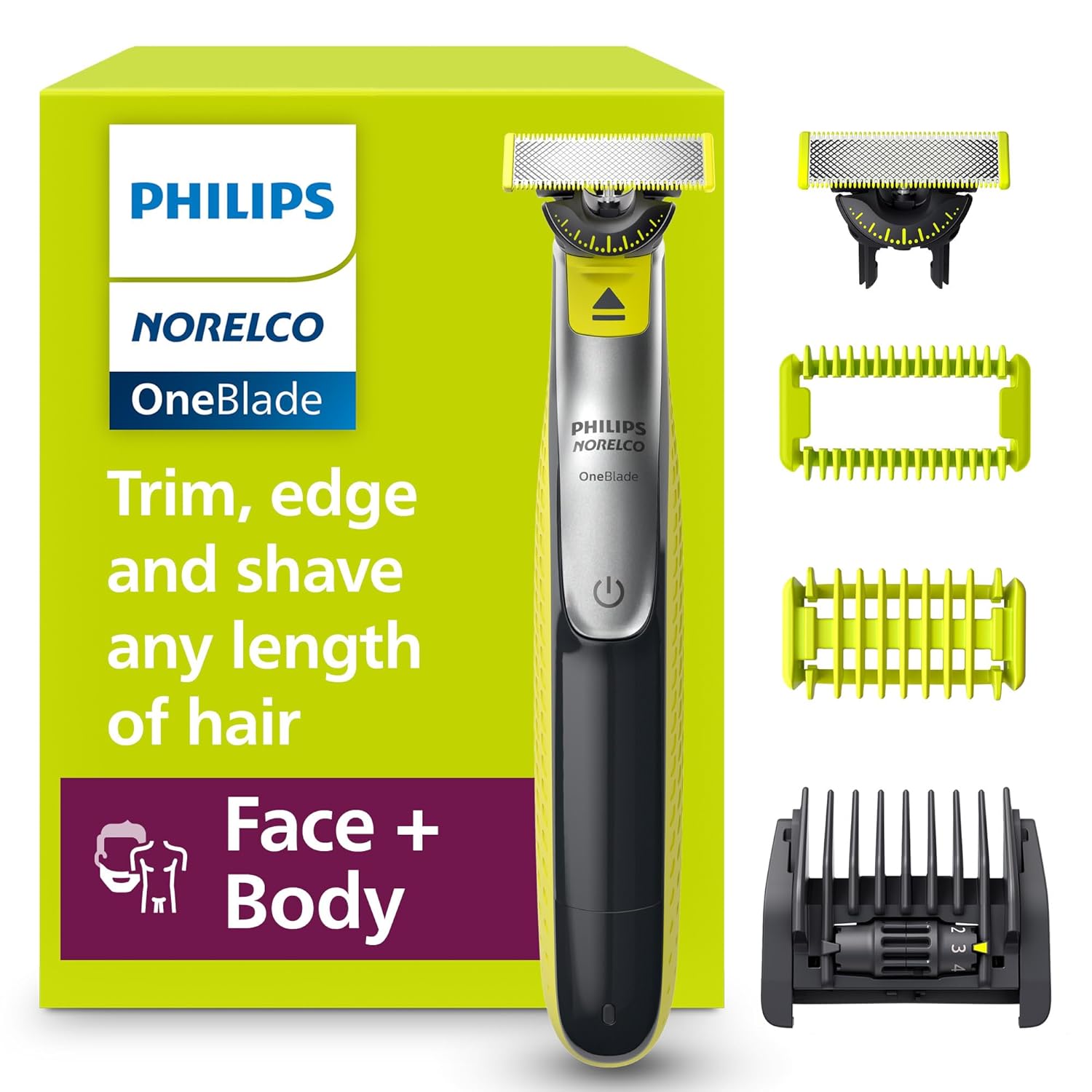
OneBlade Electric Shaver
The OneBlade's compact, narrow head is its defining advantage on the neck. Most full-size foil shavers bridge rather than follow tight curves. The OneBlade head is narrow enough to work around the Adam's apple like a precision tool. Does not cut at absolute zero-gap — maintains a safe micrometric distance from skin that prevents the catches and nicks that larger heads create.
✅ Our Take: The easiest neck shaver for most people to use correctly from day one — most forgiving on neck contours.
❌ Avoid if: You need the closest possible shave — it leaves a microscopic bit of stubble to protect the skin.
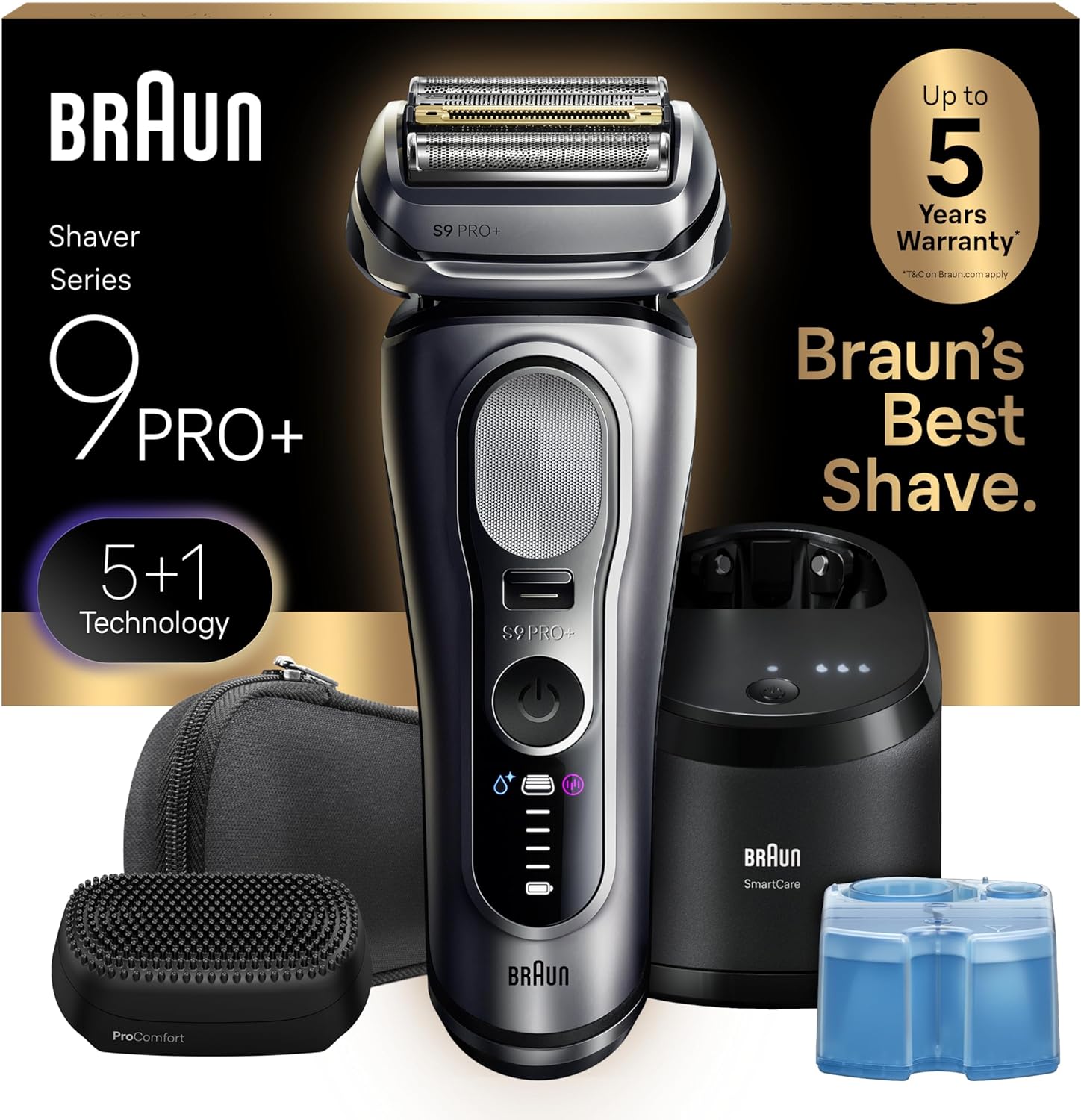
Series 9 PRO+ Electric Shaver
Contains a dedicated ProLift trimmer element — a specialized middle blade positioned to engage hairs that lie flat against the skin before the main cutting foils reach them. The 10D FlexBall head pivots in multiple axes simultaneously. Hairs that would require two or three passes with a standard foil are caught in one.
✅ Our Take: The only mainstream shaver with a dedicated flat-hair lifting mechanism — neck redness reduces dramatically within the first week.
❌ Avoid if: Budget is a constraint — this is a premium investment for a very specific neck problem.
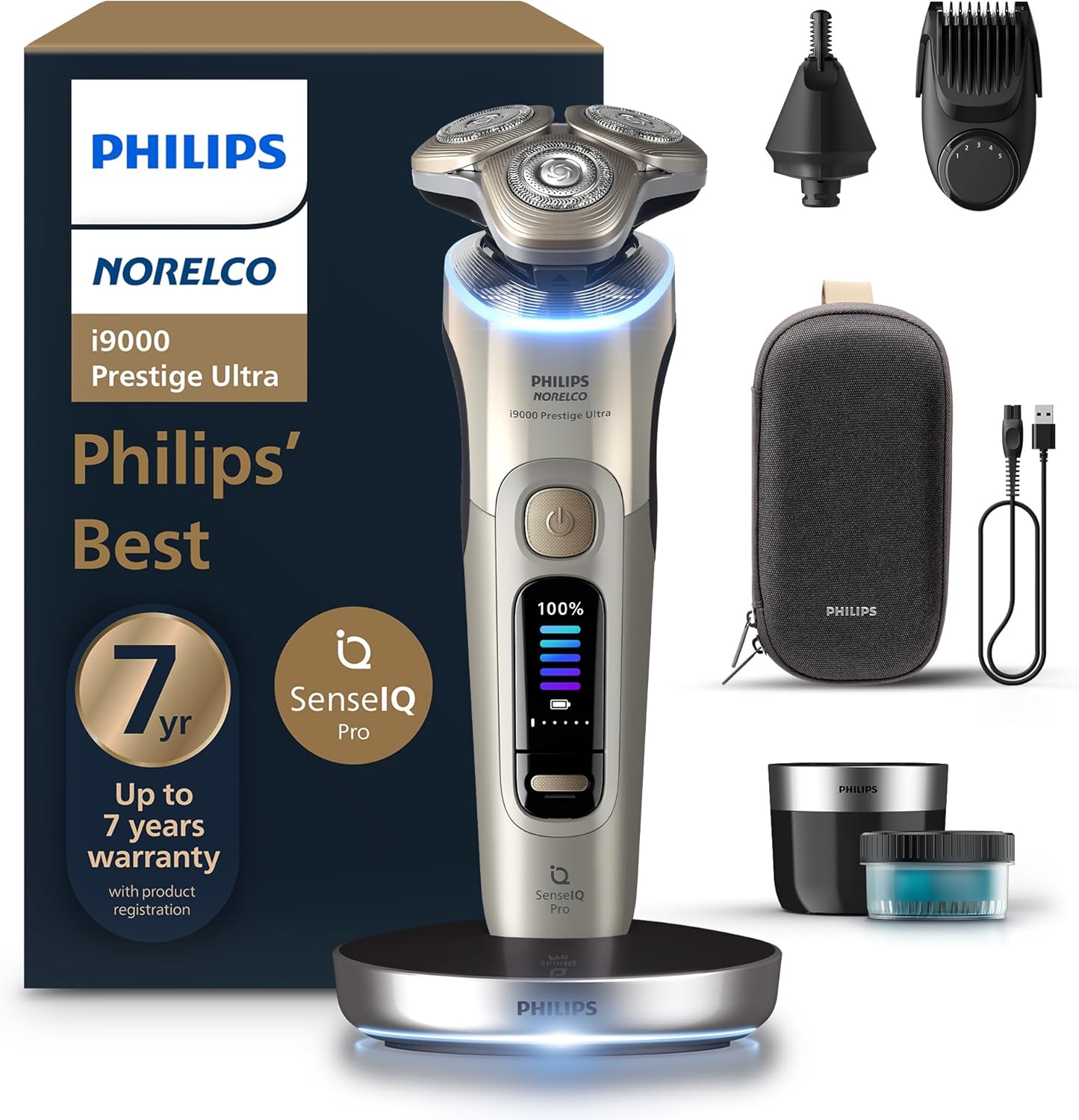
Shaver i9000 Prestige
Three fully independent GyroFlex 3D rotary heads that pivot in every direction. Each head adjusts individually to neck curves including the Adam's apple — cutting multi-directional growth without requiring the user to reposition the shaver for each growth zone. The exception to the 'foil is better for sensitive skin' rule when whorls are the core problem.
✅ Our Take: On a neck with genuinely chaotic multi-directional growth, this high-quality rotary outperforms any foil. Use with light pressure and wet pre-shave.
❌ Avoid if: Your neck hair grows in a single predictable direction — a foil will give lower baseline irritation.
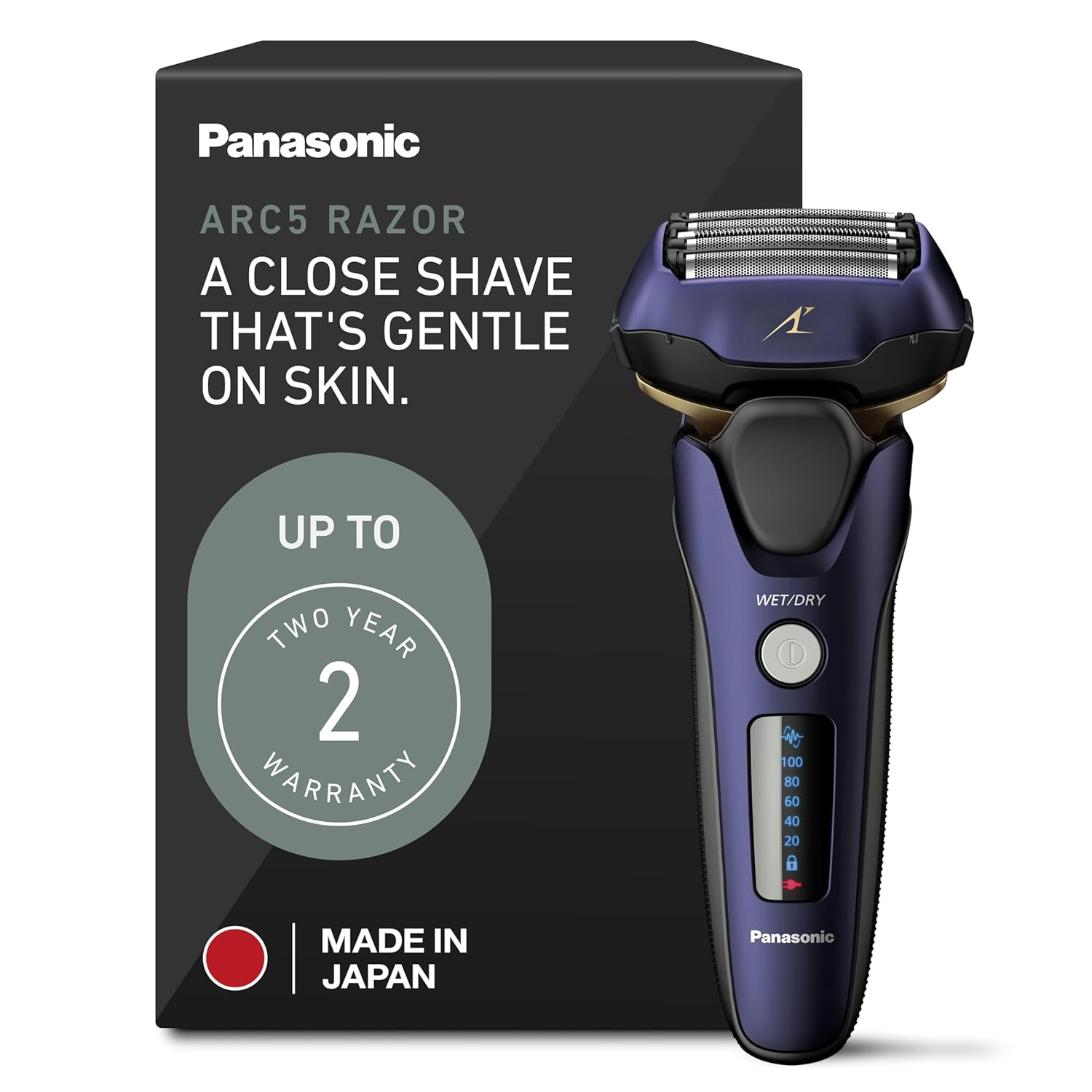
Arc5 Electric Shaver
Built around blade speed — its 14,000 CPM linear motor is among the fastest available in consumer shavers. For thick or dense neck hair, speed determines how many passes you need: a fast motor cuts each hair cleanly in a single contact. The Multi-Flex 16D head adds 16-direction geometric adaptability across the jaw-to-neck transition.
✅ Our Take: For people whose neck problem is density rather than contour — the speed advantage reduces passes where a slower motor forces repeat friction.
❌ Avoid if: Your main issue is sharp contours or whorls — this is less forgiving than the OneBlade on complex curves.
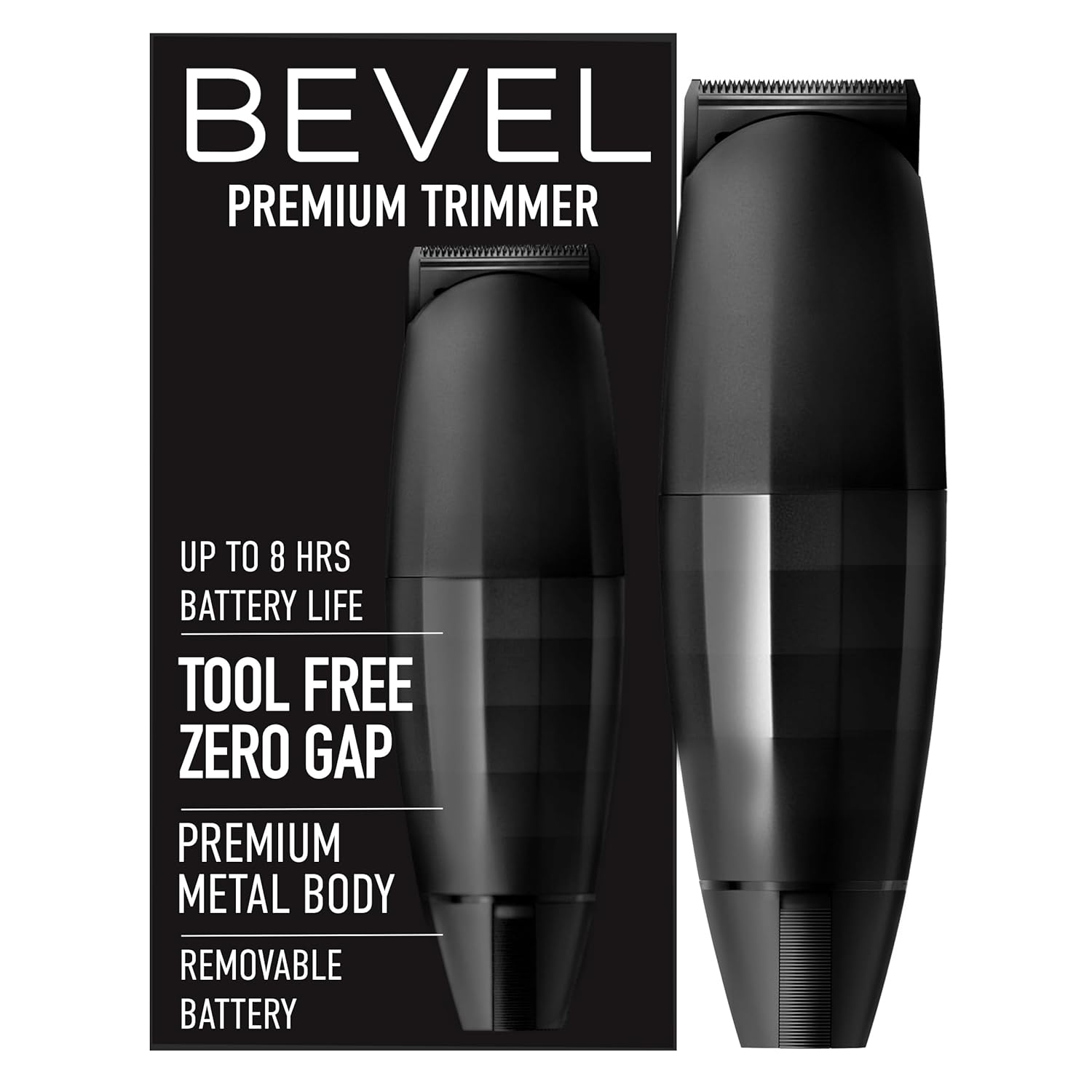
Bevel Electric Shaver & Trimmer
Runs cooler than most during extended use — the motor and blade geometry are calibrated for the longer contact times that coarse, curly beard hair requires without overheating. For the neck specifically, this matters because neck whorls common in coarse hair require longer, slower passes that heat up standard shavers. Provides unusually precise neckline control for a consumer-grade tool.
✅ Our Take: The neck shaver for men with coarse or tightly curled beard hair who need both irritation control and a clean neckline definition.
❌ Avoid if: You have fine, straight neck hair — the premium geometry isn't needed and you'll overpay.
Quick Comparison — Which Shaver Is Right for Your Neck Problem?
| Shaver | Best Neck Problem | Key Mechanical Feature | Irritation Level |
|---|---|---|---|
| Philips OneBlade | Adam's apple & sharp contours | Small nimble head, micrometric blade gap | Very Low |
| Braun Series 9 Pro | Flat-lying neck hairs | ProLift trimmer raises flat hairs before cutting | Very Low |
| Philips Norelco i9000 | Neck whorls / random growth | 3 independent rotary heads, multi-direction capture | Low |
| Panasonic Arc5 | Thick or dense neck hair | 14,000 CPM motor, 16D flex head, 5-blade arc | Low–Medium |
| Bevel Electric Shaver | Coarse/curly hair + neckline | Cool-running motor, precision neckline geometry | Low |
Foil vs. Rotary for Neck Shaving — Which Is Safer?
The standard answer is 'foil for sensitive skin.' For the neck, the answer is more specific than that.
| Foil Shaver | Rotary Shaver | |
|---|---|---|
| Neck contour adaptability | Good with flexible head; limited on tight curves | Excellent — each head adjusts independently |
| Flat-lying hair performance | Depends on model; standard foils miss flat hairs | Good — circular motion catches multiple angles |
| Adam's apple area | Difficult with large heads; good with narrow heads | Very good — independent heads wrap around curves |
| Multi-directional growth (whorls) | Requires repositioning per growth direction | Handles multiple directions in one pass |
| Irritation level | Lower baseline — less blade-to-skin contact | Higher baseline — but reduces passes on complex growth |
| Best for neck? | Most cases — especially thin/reactive skin | When hair grows in multiple directions (whorls) |
How to Shave Your Neck Without Irritation — Step by Step
Technique matters more on the neck than on any other shaving zone. The right shaver with wrong technique still produces irritation. These steps work regardless of which shaver you use.
- Map your neck hair growth before the first shave. Pull the skin taut and run your fingertip in different directions — the direction that feels rough is against the grain. Neck whorls often mean one area grows down while the adjacent area grows sideways.
- Start with a light pre-shave. For electric shaving on the neck, a dry face is usually better — but if your neck consistently reacts, a thin layer of non-comedogenic pre-shave powder or a light foam on a wet-rated shaver reduces friction significantly.
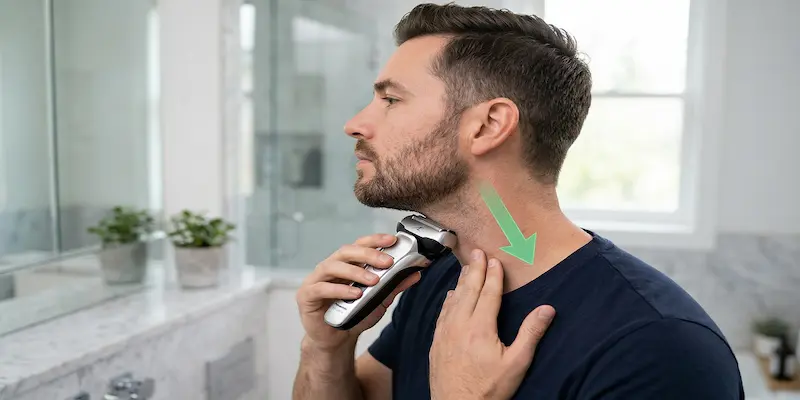
- Shave with the grain on the first pass. On most necks this means downward strokes. On the lower neck it sometimes reverses. Follow what you mapped in step one, not a default assumption.
- Use the weight of the shaver — not your hand. The shaver should rest against your skin under its own weight. Your hand guides direction; it doesn't apply pressure. If you find yourself pressing, the blade is probably dull or the shaver isn't making full contact due to a contour mismatch.
- Stretch the skin with your free hand on the lower neck and around the Adam's apple. This creates a flat surface for the foil and raises flat-lying hairs slightly. It's the single most effective free technique change for reducing neck irritation.
- Maximum two passes. A second pass against the grain is acceptable if the first wasn't close enough — but only with lighter pressure than the first. A third pass is almost always more irritation than it's worth.
- Rinse with cool water immediately and apply an alcohol-free, fragrance-free balm within 60 seconds of finishing. The post-shave window is when follicles are most open and most vulnerable to irritation-amplifying ingredients.
Common Neck Shaving Mistakes That Cause Irritation
- Shaving against the grain immediately — going against the grain on the first pass is the fastest route to neck redness and ingrown hairs. The neck hair doesn't lift the same way as cheek hair; it needs to be cut with the grain first before an against-grain pass has any benefit.
- Multiple passes over the same spot — if you're making three or more passes over the same neck area, the problem is your shaver or technique, not insufficient shaving. More passes multiply friction without improving closeness after a certain point.
- Pressing harder to catch flat-lying hairs — the instinctive response when the shaver misses hairs. It's exactly the wrong move: more pressure increases friction on the surrounding skin without meaningfully improving flat-hair capture. The fix is a shaver with a lift mechanism, not more force.
- Dirty shaver head — on the neck, where follicles are larger and skin thinner, bacterial contamination from a dirty foil causes faster and more severe reactions than on the jaw. Clean with alcohol spray at minimum every other shave.
- No post-shave product — the neck needs aftercare more than the cheeks. Skipping it leaves freshly disrupted follicles without the barrier support to recover before the next shave.
Frequently Asked Questions
The most common cause is multiple passes over the same skin to catch flat-lying hairs — each pass multiplies friction and follicle disruption until the skin reacts visibly. The fix is a shaver with a lift-and-cut mechanism (like the Braun Series 9 Pro's ProLift) that captures flat-lying hairs in a single pass. The second most common cause is a dirty shaver head transferring bacterial buildup to freshly disrupted neck follicles. Start with a proper alcohol spray cleaning and assess whether the redness pattern changes before replacing the shaver entirely.
For most people, foil — specifically a foil with a flexible head and good skin contact. The controlled linear cutting motion creates less friction per stroke than a rotary, which matters on thin neck skin. The exception: if your neck hair grows in clearly visible whorls or in multiple conflicting directions, a high-quality rotary like the Philips Norelco i9000 often outperforms a standard foil because the three independent rotating heads capture multi-directional growth without requiring you to reposition for each growth zone. The honest answer is that it depends on your specific growth pattern.
Two approaches work. The technique approach: stretch the skin taut with your free hand to physically raise flat-lying hairs slightly into the foil's capture zone. This is free, immediate, and makes a noticeable difference on the first try. The equipment approach: use a shaver with a dedicated lift mechanism — the Braun Series 9 Pro's ProLift trimmer is specifically designed to raise flat-lying hairs before the main blades reach them. The combination of both — skin stretch plus a lift-equipped shaver — essentially eliminates the flat-lying hair problem for most users.
Down first (with the grain) for the first pass on most people. Neck hair typically grows downward, so downward strokes are with the grain and cause the least follicle disruption. On the lower neck, the grain sometimes reverses — this is where mapping your growth pattern before shaving matters. A second pass upward (against the grain) is acceptable for closeness, but only with lighter pressure than the first pass and only if your skin handled the first pass without reacting. Never start with an against-grain pass on the neck — it's the single most reliable way to cause immediate redness.
The best electric razor for neck hair depends on your growth pattern. If your neck hair grows flat against the skin, a foil razor with a lifting trimmer (like the Braun Series 9 Pro) is best. If your neck hair grows in whorls or random directions around the Adam's apple, a premium rotary razor (like the Philips Norelco 9000) will reduce the number of passes needed, thereby stopping irritation.