There's a specific kind of frustration that comes from an electric shaver that pulls instead of cuts. It doesn't hurt the same way a nick does — it's more like someone is tweezing individual hairs one by one. If that sounds familiar, your shaver isn't broken. Something mechanical is off, and most of the time it's fixable in minutes.
Electric razor pulling hair is one of the most searched shaver complaints online — and almost every time, the cause is mechanical. It's not your skin type, it's not your beard. It's friction, torque, blade condition, or buildup inside the cutting head.
Table of Contents
- Quick Diagnosis Table
- Why Is My Electric Razor Pulling Hair Not Cutting?
- 1. Dull Blades and Worn-Out Foils
- 2. Hard Water Mineral Buildup Inside the Shaver Head
- 3. Low Battery and Motor Torque Drop
- 4. Your Beard Is Too Long for a Foil Shaver
- 5. Lack of Lubrication — The Friction Problem
- Pulling vs. Snagging vs. Missing Hairs
- How to Prevent Your Electric Shaver From Pulling Again
- Frequently Asked Questions
- When to Consider an Upgrade
Quick Diagnosis: Why Your Electric Shaver Is Snagging
If you're in a hurry, use this table to identify your issue immediately:
| Symptom | Likely Cause | Quick Fix |
|---|---|---|
| Feels like tweezing on every stroke | Dull blades / worn-out foil | Replace blade head |
| Pulls randomly, not consistently | Low battery — motor torque drop | Charge fully before shaving |
| Misses flat-lying hairs, then catches them | Beard too long for foil shaver | Pre-trim to 1–2 mm first |
| Dragging feeling, gets worse over time | No lubrication / dry foil | Apply one drop of shaver oil |
| Pulls more after washing or traveling | Hard water mineral buildup | Deep clean with vinegar soak |
| Snagging on one side only | Blade misalignment or bent foil | Inspect foil, reseat or replace |
Why Is My Electric Razor Pulling Hair Not Cutting? (The Mechanical Truth)
The short answer: your cutting mechanism can't generate enough speed or clean contact to sever the hair. Instead of slicing cleanly, the blade catches the hair and drags it before (sometimes) cutting it. That's the tweezing sensation.
This is always a mechanical problem — friction, motor torque drop, blade geometry, or foreign material blocking the cutting path. Understanding which of the five causes applies to your shaver tells you exactly what to fix.
1 Dull Blades and Worn-Out Foils
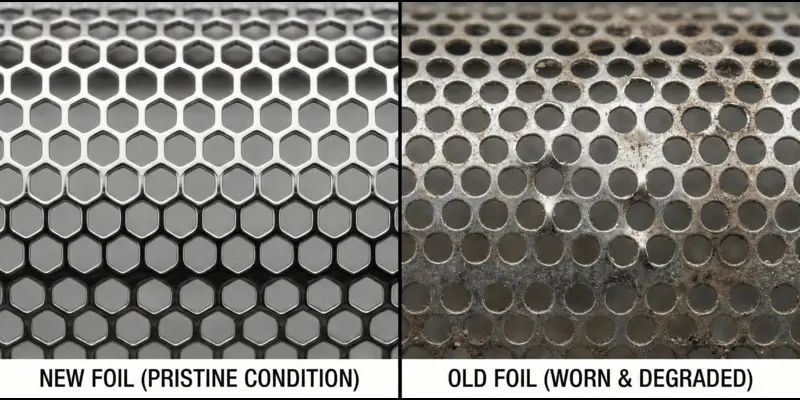
This is the most common cause by far. Electric shaver blades dull gradually — so gradually that most people don't notice until the pulling becomes impossible to ignore.
A sharp foil shaver has a cutting edge that grabs hair cleanly through the foil mesh and cuts it in one motion. A dull blade edge rounds off and deforms under pressure instead of cutting. The hair bends, gets caught, and either pulls out or gets cut through repeated dragging. Both feel painful.
How to Tell If Your Electric Shaver Blades Are Dull
The most reliable sign is consistency: if your shaver used to feel smooth and now pulls on every stroke regardless of battery charge or beard length, the blades are almost certainly the issue. Other signs include visible foil discoloration, a rougher texture on the foil mesh when you run your finger across it, and a noticeably louder cutting sound (the motor working harder against increased resistance).
Most manufacturers recommend replacing the foil and blade block every 12–18 months under regular daily use. If you're past that window, a new head is the first thing to try — not a deep clean, not new oil.
Blade misalignment can also mimic dullness. If the blade block wasn't seated correctly after cleaning, one edge may sit slightly higher than the other, creating uneven friction. Remove the head, reseat it firmly, and test before ordering a replacement.
2 Hard Water Mineral Buildup Inside the Shaver Head
This one is consistently underestimated — and it's the mechanical cause most directly connected to water quality at home.
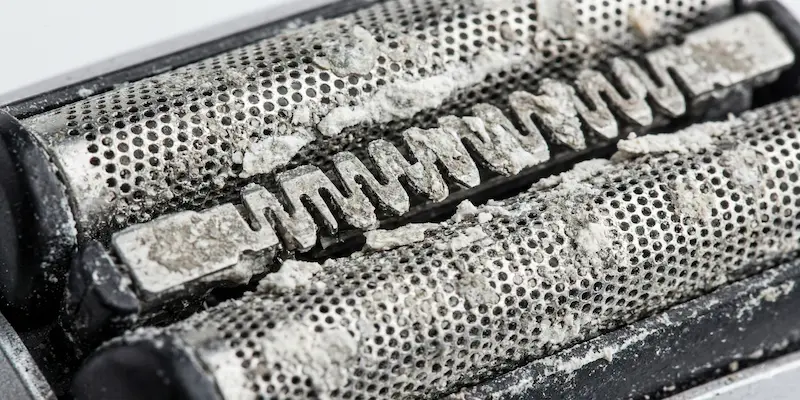
If you rinse your shaver under tap water in a hard water area, calcium deposits and mineral residue accumulate inside the cutting head with every wash. Over weeks, this buildup coats the inside of the foil and the blade edges. The result is a clogged shaving head where hair can't feed cleanly into the cutting path.
How Hard Water Increases Friction
Calcium deposits are abrasive. As mineral residue builds up between the foil and the blade, the blade starts grinding against a rough surface instead of moving freely. This generates extra friction and motor drag — the motor works harder, RPM drops slightly, and cutting efficiency drops enough that hairs get pulled rather than cut.
The symptom pattern is distinctive: if your shaver pulls more after washing it or after traveling to an area with different water, hard water buildup is likely the cause. The pulling usually eases temporarily right after cleaning and gets progressively worse over days before cleaning again.
A diluted white vinegar soak (15 minutes, one part vinegar to three parts water) dissolves calcium deposits effectively. For stubborn buildup, use a purpose-made cleaning tablet from your shaver's brand — most cleaning stations include them. Rinse thoroughly afterward to remove any vinegar residue, which itself can be mildly corrosive over time.
3 Low Battery and Motor Torque Drop
This one surprises people the most. Yes, a partially charged battery can cause an electric razor to pull hair.
Electric shaver motors operate at peak cutting efficiency within a specific RPM range. At full charge, the motor spins at design speed and the blades cut cleanly. As battery level drops, motor torque decreases — the motor can still turn, but it can't maintain the RPM required for clean cutting under the resistance of beard hair.
Can Low Battery Cause Electric Razor to Pull?
It can, and it's more common than people realize. The drop-off isn't linear — most shavers perform fine between 100% and roughly 40% charge. Below that, performance degrades noticeably. Below 20%, pulling becomes likely on denser or coarser hair.
| Battery Level | Motor Performance | Shaving Experience |
|---|---|---|
| 100% – 60% | Full torque — peak RPM | Clean, smooth cut |
| 60% – 40% | Slight torque reduction | Mostly fine, may struggle on thick areas |
| 40% – 20% | Noticeable RPM drop | Pulling likely on dense beards |
| Below 20% | Significant motor drag | Consistent pulling and snagging |
The fix is simple: charge fully before shaving, and don't use the shaver while it's plugged in unless the manual specifically says corded use maintains full performance. Many shavers actually perform worse while charging than on a full battery.
If your shaver pulls consistently even at full charge, eliminate battery as the variable before moving to blades or buildup.
4 Your Beard Is Too Long for a Foil Shaver
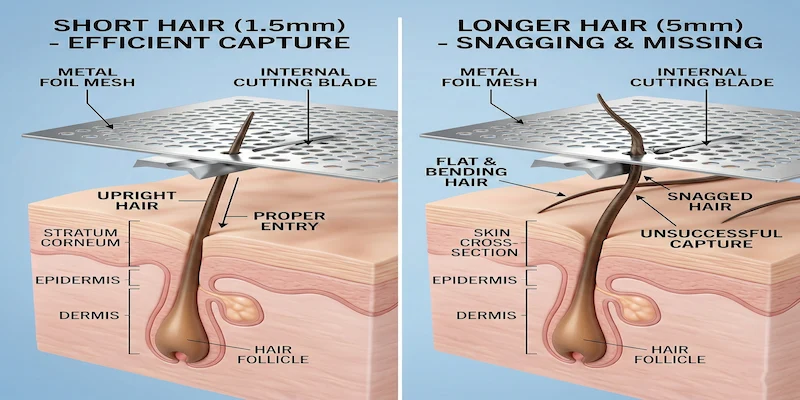
Foil shavers are designed for short stubble — typically under 2 mm. When beard length exceeds what the foil was designed to handle, hairs can't feed cleanly into the cutting slots. Instead of being guided into the blade path, longer hairs bend, lie flat, and get caught at an angle.
Trimming Your Beard Before Electric Shaving
Hair density overload is a real mechanical problem. When you put a foil shaver over 4–5 mm of growth, you're essentially trying to push too many hairs into a cutting path designed for shorter input. The motor slows under the load, the foil can't feed hairs fast enough, and stubble length too long for the slot geometry leads to pulling on every stroke.
The fix: use a trimmer or comb attachment to bring the beard down to 1–2 mm before using the foil shaver. This one step eliminates pulling almost entirely in cases where beard length is the cause.
Flat-lying hairs are a related issue. Hairs that grow parallel to the skin surface — common on the neck — don't stand up to feed into the foil. The shaver passes over them, then catches the tip at the end of the stroke. Stretching the skin taut and changing the angle of approach resolves most of this.
5 Lack of Lubrication — The Friction Problem
The foil and blade assembly in an electric shaver are in constant high-speed contact. Without lubrication, metal-on-metal friction builds up — the blade resists movement, RPM drops under load, and the cutting action degrades.
Lubricating Electric Shaver Foil Properly
Most shavers come with a small bottle of shaver oil, and most people use it once and forget about it. Improper lubrication — specifically, not lubricating at all — is a direct cause of motor drag and blade friction that leads to pulling.
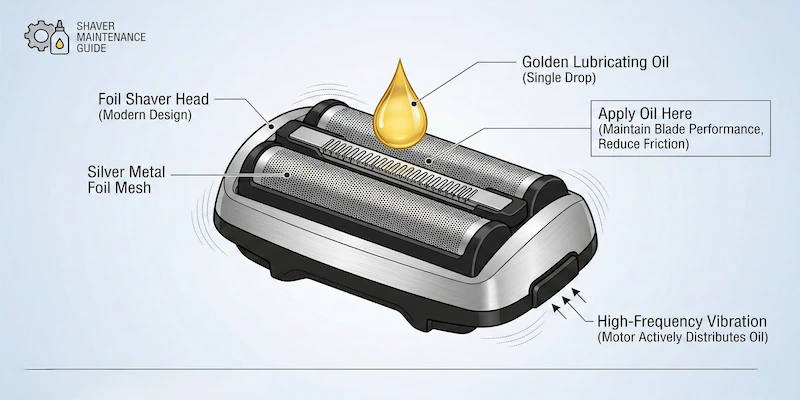
The correct protocol: one small drop of shaver oil on the foil (not inside the head) before running the shaver for 5–10 seconds with the head on. The vibration distributes the oil evenly across the cutting surface. Do this every one to two weeks under regular use.
If you use a cleaning station, check whether the cleaning cartridge is empty. Cleaning station solutions serve a dual purpose — cleaning and light lubrication. An empty cartridge means your shaver has been running dry for weeks.
For shavers without a cleaning station, apply oil manually after each cleaning. The oil creates a thin film that reduces friction between the foil mesh and the oscillating blades — restoring the smooth, low-resistance cutting motion the shaver was designed to deliver.
Pulling vs. Snagging vs. Missing Hairs — What's the Difference?
These three symptoms feel similar but have different mechanical causes. Getting the diagnosis right saves you from replacing parts that don't need replacing.
| Issue | What It Feels Like | Mechanical Cause | Fix |
|---|---|---|---|
| Pulling | Hair yanked from root before cutting | Dull blades, worn-out foil | Replace blade head |
| Snagging | Shaver catches and releases hair unevenly | Mineral buildup, clogged shaving head | Deep clean — vinegar or cleaning tablet |
| Missing flat hairs | Shaver glides over hairs without cutting | Hair lying parallel to skin (angle issue) | Change approach angle, stretch skin |
| Dragging | Shaver moves slowly across skin, slight burn | No lubrication, motor torque drop | Oil the foil, check battery |
If you're experiencing a mix of these symptoms — some pulling, some missing, some snagging — you likely have more than one issue. Start with lubrication and a full charge to eliminate the quick fixes, then assess whether you need a head replacement or deep clean.
How to Prevent Your Electric Shaver From Pulling Again
Once you've fixed the immediate problem, these habits keep it from coming back:
- Replace the blade head every 12–18 months — set a calendar reminder. Waiting until it pulls means months of degraded performance.
- Deep clean monthly — remove the head, rinse thoroughly, and do a vinegar soak if you're in a hard water area. Don't rely on quick rinses alone.
- Use distilled water for rinsing if you live in a hard water area. Tap water deposits accumulate faster than most people realize.
- Oil the foil weekly with one drop of shaver oil — takes 30 seconds and directly prevents friction buildup.
- Trim longer beards (3 mm+) before using a foil shaver. Keep a small trimmer for this — it extends the life of the foil blade significantly.
- Charge fully before each shave — don't shave on the low battery indicator. The motor performance difference is real.
Frequently Asked Questions
Yes, and it's more common than most people expect. As battery charge drops below roughly 40%, motor torque decreases enough to affect cutting efficiency. The blades still move, but they can't maintain the RPM needed to cut hair cleanly under resistance. The result is a dragging or pulling sensation, especially on denser parts of the beard. The fix is straightforward: always charge your shaver fully before use and avoid running it on low battery. If you shave daily, a full charge every two to three days is usually sufficient.
That tweezing feeling — where individual hairs seem to be pulled from the root rather than cut — is the clearest sign of dull blades or a worn-out foil. A sharp blade cuts hair cleanly in a single motion. A dull edge bends and catches the hair instead of slicing through it. The hair gets tugged before eventually being cut or torn. If your shaver is more than 12–18 months old and the head hasn't been replaced, that's almost certainly the cause. Replacement heads are available for most major brands and usually solve the problem immediately.
Most manufacturers recommend every 12–18 months under daily use. The exact interval depends on beard coarseness, how often you clean and oil the head, and whether you shave daily or every few days. A coarse, dense beard wears blades faster. Poor maintenance (no lubrication, infrequent cleaning) accelerates wear. A reliable rule of thumb: if the shaver starts pulling after a full charge, a thorough clean, and fresh lubrication, it's time for a new head. Don't wait for the shave to become painful.
Hard water doesn't damage shavers instantly, but the mineral residue it leaves behind causes progressive mechanical problems. Calcium and mineral deposits accumulate inside the foil, coat the blade edges, and create friction that degrades cutting performance over weeks. The shaver starts pulling, then snagging, and eventually misses large patches if buildup isn't removed. A monthly deep clean with a vinegar soak or cleaning tablets reverses most of the damage. Using distilled water for rinsing in hard water areas prevents buildup from forming in the first place.
When to Consider an Upgrade
If your shaver is older than two years, still pulls after a deep clean, fresh lubrication, and a full charge, and the replacement head costs nearly as much as a new entry-level model — it's worth considering an upgrade rather than a repair.
Newer foil shaver models — particularly the Braun Series 9 and Philips Norelco Shaver 9000 range — use higher-torque motors that maintain cutting RPM even on dense or coarse beards. The motor drag problem that causes pulling at lower power levels is significantly reduced in these designs.
If you're also dealing with skin irritation alongside the mechanical issues, our guide on electric shaving for sensitive skin covers how to choose a shaver that handles both dense beards and reactive skin without compromise.
Not Sure Which Shaver to Upgrade To?
Use our Smart Shaver Finder to get a personalised shortlist based on your beard density, skin type, and irritation pattern — no guesswork required.
Try the AI Shaver Finder