Last updated: February 2026 | Reading time: ~12 min
If your skin turns red, burns, or breaks out after every shave, you're not alone. Sensitive skin and traditional razors have a complicated relationship — one that often ends in razor burn, ingrown hairs, and a shelf full of products that don't really help.
Switching to an electric shaver can genuinely change things. No blades dragging across bare skin, no micro cuts, no foam that strips your skin barrier. But the transition isn't always smooth from day one.
Most people don't realize there's a real adjustment period when switching to electric shaving for sensitive skin — usually two to four weeks where your skin is adapting, possibly looking worse before it gets better. Once that window passes, most people wonder why they didn't switch sooner.
This guide covers everything: why traditional razors irritate sensitive skin, how electric shavers work differently, what to expect during the adjustment period, and how to choose the right shaver for your specific skin type.
Table of Contents
- Why Sensitive Skin Reacts to Traditional Razors
- Electric Shaver vs Razor — The Real Difference
- The Adjustment Period — What to Expect in the First 2–4 Weeks
- Foil vs Rotary — Which Is Better for Sensitive Skin?
- How to Shave With an Electric Shaver Without Irritation
- Pre-Shave & Post-Shave Routine
- Common Problems and Quick Fixes
- Who Should NOT Switch to Electric Shaving?
- How to Choose the Right Electric Shaver
- Frequently Asked Questions
Why Sensitive Skin Reacts to Traditional Razors
The core problem with traditional razors is mechanical: the blade cuts hair below the skin surface. On tough skin, that's fine. On sensitive skin, it triggers a cycle of inflammation that's hard to break.
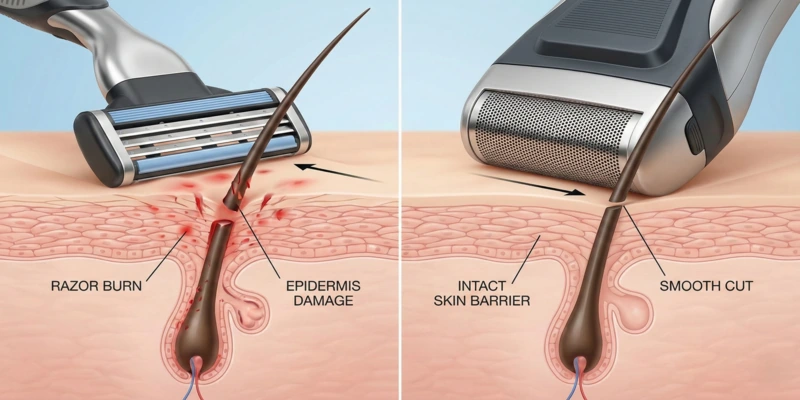
Every stroke of a multi-blade razor creates microscopic cuts along the skin's surface. These micro cuts let bacteria in, weaken the skin barrier, and trigger redness and swelling — what most people recognize as razor burn or shaving rash.
Ingrown hairs are another consequence. When a blade cuts hair below skin level, the hair sometimes curls back into the follicle instead of growing outward. This leads to folliculitis — inflamed, sometimes infected hair follicles that show up as red bumps or whiteheads along the jaw, neck, or chin.
Add in repeated pressure, friction from multiple blades, and shaving the same area twice to get a closer shave, and you have a recipe for chronic skin irritation that never fully heals.
Electric Shaver vs Razor — The Real Difference
An electric shaver doesn't cut hair the same way a blade does. The foil or rotary cutting mechanism trims hair at or just above the skin's surface, which means less friction, less pressure, and no cuts below the skin line.
That single difference eliminates most of the triggers for irritation. There are no micro cuts opening the skin to bacteria. The skin barrier stays intact. Ingrown hairs become much less frequent because the hair is cut cleanly at the surface rather than below it.
Here's a straightforward comparison:
| Feature | Traditional Razor | Electric Shaver |
|---|---|---|
| Cuts Below Skin | Yes | No |
| Risk of Ingrown Hairs | High | Low–Moderate |
| Razor Burn Risk | Moderate–High | Low (after adjustment) |
| Skin Barrier Disruption | Yes (daily) | Minimal |
| Irritation Level | Moderate–High | Low–Moderate |
| Learning Curve | Low | 2–4 Weeks |
| Wet Use Possible | Yes | Depends on model |
| Maintenance Required | Blade replacement | Cleaning + lubrication |
One thing worth noting: electric shavers don't always give as close a shave as a sharp blade — especially in the first few weeks. But for people with sensitive skin, a slightly less close shave is a worthwhile trade for skin that isn't red and irritated every morning.
Dermatologists generally recommend foil systems for highly reactive skin because the protective guard limits direct blade contact, reducing micro-trauma.
The Adjustment Period — What to Expect in the First 2–4 Weeks
This is the part most people aren't warned about, and it's why many give up on electric shaving for sensitive skin too soon.
When you switch from a razor to an electric shaver, your skin and hair follicles need time to adapt. Your beard hair has been trained to grow in a certain pattern, and your skin has developed a protective response to razor friction. Disrupting that takes a few weeks.
During the first week, you might notice redness, mild itching, or a less-than-perfect shave. Some people get small whiteheads along the jaw or neck — not because the shaver is dirty, but because follicles are adjusting to the new cutting angle and reduced pressure.
By week two, things usually stabilize. The redness fades, the shave gets closer, and the irritation drops noticeably. By week three or four, most people with sensitive skin are seeing a real improvement over their old razor routine.
The key is not to quit during that first week. The discomfort is temporary. The improvement is lasting.

Foil vs Rotary — Which Is Better for Sensitive Skin?
This question comes up constantly, and the answer depends on your skin type and beard texture.
A foil shaver uses straight oscillating blades under a thin metal mesh. The foil acts as a buffer between the blades and your skin, which means less direct blade exposure and a more controlled shave. The cutting motion is linear and predictable, which tends to cause less irritation on very sensitive or acne-prone skin.
A rotary shaver uses circular blades that pivot and flex with the contours of your face. The pivoting head adapts well to jaw angles and necks, and the multi-direction cutting motion works better for thick, curly, or coarse beard hair. However, the circular motion can be more irritating for very reactive skin because each blade passes over the same area more often.
| Skin / Hair Type | Recommended Type | Why It Works Better |
|---|---|---|
| Very Sensitive / Thin Skin | Foil Shaver | Less direct blade exposure, controlled linear motion |
| Acne-Prone Skin | Foil Shaver | More predictable pressure, less friction per stroke |
| Thick or Coarse Beard | Rotary Shaver | Better multi-direction cutting handles dense hair |
| Thick Curly Hair | Rotary Shaver | Circular motion catches hairs growing in multiple directions |
| Combination (sensitive + coarse) | Foil Shaver | Hypoallergenic foil options available; use slow strokes |
Most dermatologists lean toward foil shavers for sensitive skin specifically because of the hypoallergenic foil options many brands now offer. A hypoallergenic electric shaver uses stainless steel blades and a specially coated foil that minimizes the metal contact reaction some people experience.
Motor speed also plays a role. A shaver with a smooth, consistent motor creates less mechanical friction against the skin than an older or underpowered motor that vibrates unevenly.
How to Shave With an Electric Shaver Without Irritation
Even the best shaver causes irritation if you use it wrong. These techniques make a real difference — especially during the adjustment period.
1. Start Dry in Most Cases
Contrary to what you might expect, most electric shavers work better on dry skin. Dry hair is stiffer and easier for the foil to catch. Shaving right after washing your face when skin is soft can actually increase pulling and irritation.
If your shaver is rated for wet use and you prefer it, you can use a small amount of shaving cream or gel.
2. Use Light Pressure
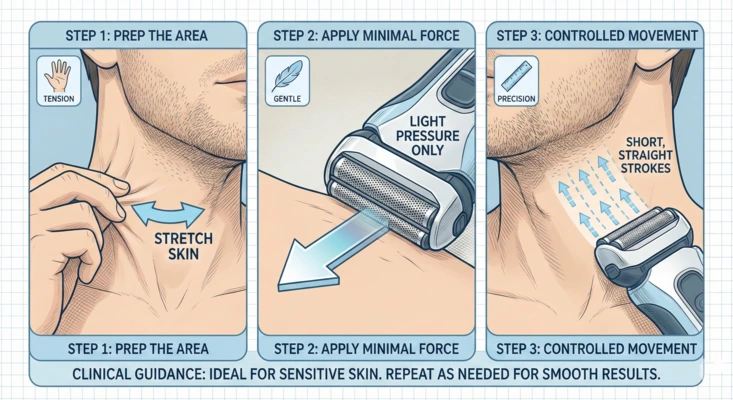
This is the biggest mistake people make coming from manual razors. You don't need to press an electric shaver into your skin. The motor does the work. Pressing harder just increases friction and defeats the purpose of the protective foil.
Hold the shaver with the same pressure you'd use to hold a phone — firm enough to control it, light enough that you're not actively pushing.
3. Short, Controlled Strokes
Don't drag the shaver across your whole cheek in one long stroke. Use short overlapping strokes, especially in areas that tend to get irritated — the neck, the jaw angle, and around the chin.
For a foil shaver, shave with the grain first (in the direction of hair growth), then make a light second pass against the grain only if needed. Avoid over-shaving the same area multiple times.
4. Stretch the Skin
On the neck especially, use your free hand to gently pull the skin taut. This raises the hair slightly and helps the foil cut more cleanly with less tugging.
5. Keep the Blades Clean
A shaver with bacterial buildup on the blades is a guaranteed source of irritation. Clean the foil and blades after every shave — most modern shavers have a rinse-under-tap system. Use the lubricating oil that comes with the shaver every few weeks to keep the cutting mechanism smooth.
Hard water mineral buildup on the foil is also a hidden cause of pulling and skin irritation. If you live in a hard water area, a monthly soak with diluted white vinegar keeps the foil clear.
Blade dullness is another common culprit — most manufacturers recommend replacing the foil and blade block every 12–18 months.
Pre-Shave & Post-Shave Routine for Sensitive Skin
The shave itself is only part of the equation. What you do before and after matters just as much — especially during the adjustment period.
Before You Shave
If you're dry shaving (which is usually best for sensitive skin), don't wash your face immediately beforehand. Morning shaving — before the hot shower — often works better because skin is still firm and hair hasn't been softened by steam.
If you prefer wet shaving with your electric shaver, rinse with warm water first to soften the beard slightly, but avoid very hot water — it over-dilates blood vessels and makes skin more reactive.
Pre-shave oil designed for electric shavers can help reduce friction significantly. Apply a small amount and let it absorb for 30 seconds before shaving.
After You Shave
Rinse with cool water to close pores and reduce inflammation. Avoid alcohol-based aftershaves — they strip the skin barrier and cause stinging that sensitive skin doesn't recover from quickly.
Use an alcohol-free aftershave balm or a simple fragrance-free moisturizer. Ingredients like aloe vera, niacinamide, or centella asiatica help calm post-shave redness and support the skin barrier.
If you're in the adjustment period and experiencing more irritation than usual, a small amount of 1% hydrocortisone cream applied after moisturizing can reduce inflammation quickly — but don't use it daily long-term without checking with a dermatologist.
Common Problems and Quick Fixes
These are the issues people run into most often — and what actually resolves them.
Whiteheads or Bumps After Shaving
Usually a sign that the blades need cleaning, or that you're pressing too hard. Clean and disinfect the foil, reduce pressure, and shave with the grain for a week or two.
Hair Pulling Instead of Cutting
This almost always means the blades are dull or the foil is damaged. Check when you last replaced the blade block — most manufacturers recommend every 12–18 months. A bent or clogged foil can also cause pulling; inspect it under good light and replace if you see any deformation. More causes and fixes in our full article: electric razor pulling hair — 5 reasons your shaver isn't cutting properly.
Neck Irritation
The neck is the most common problem area because hair grows in multiple directions. Shave with the grain on the first pass, stretch the skin with your free hand, and use very short strokes.
Razor Burn vs Electric Shaver Redness — What's the Difference?
Razor burn from a blade usually shows up as a burning, streaky redness immediately after shaving. Electric shaver irritation during the adjustment period tends to be more diffuse — a general flush rather than a localized burn. Understanding the difference helps you troubleshoot faster.
Who Should NOT Switch to Electric Shaving?
Electric shaving for sensitive skin is genuinely the better option for most people — but not everyone. It's worth being honest about the cases where a traditional razor might still be the right call.
You Need an Ultra-Close Shave Every Day
If your job or appearance standards require a blade-smooth shave daily, most electric shavers won't match that level of closeness — especially in the early weeks. Some high-end foil shavers come close, but the gap is real.
You Have Very Patchy or Sparse Growth
Electric shavers work best with consistent beard coverage. Very patchy growth means the foil or rotary head is constantly crossing bare skin, which creates friction without the buffer of hair. In this case, a single-blade safety razor with a gentle technique often causes less irritation.
You Don't Want to Deal With Maintenance
Electric shavers need regular cleaning, occasional lubrication, and blade replacement every year or so. If you'd rather not deal with that, a cartridge razor with fresh blades is simpler — though your skin will likely pay for the convenience.
You Have an Extremely Dense, Wiry Beard
Very dense, coarse beards can tax some electric shavers, leading to multiple passes and ultimately more skin contact than necessary. A foil shaver with a high-cycle motor makes a big difference here.
Understand Your Beard Growth Direction Before Switching
Sensitive skin is often made worse by shaving against unpredictable beard growth patterns. Many men have multi-directional hair growth, especially on the neck.
Before using an electric shaver regularly, map your beard growth:
- Let your facial hair grow for 24–48 hours
- Run your fingers across your beard to feel the direction of resistance
- Note areas where hair grows sideways or in circular patterns
Shaving in the correct direction reduces friction, inflammation, and ingrown hairs — especially during the electric shaving adjustment phase.
How to Choose the Right Electric Shaver for Your Skin Type
Not all electric shavers are equal for sensitive skin. Here's what actually matters when choosing one.
Foil vs Rotary (Revisited for Buying)
For most people with sensitive skin, start with a foil shaver. Brands like Braun and Panasonic have models specifically designed for sensitive skin with hypoallergenic foils and flexible shaving heads that reduce pressure points.
Motor Speed and Consistency
A higher-speed motor (measured in cycles per minute) means each hair gets cut more cleanly with less tugging. Look for shavers with 50,000+ micro-vibrations or cutting strokes per minute. Inconsistent or slow motors create more friction — exactly what sensitive skin doesn't need.
Blade Material
Stainless steel blades are standard and work well for most people. If you have a known metal sensitivity, look for models with hypoallergenic blades — usually titanium-coated or specially treated stainless steel that reduces nickel exposure.
Waterproof Rating
A shaver rated IPX7 can be used in the shower and cleaned under running water easily. Easy cleaning means more consistent maintenance, which directly affects how much bacteria and buildup accumulates on the foil.
Pivoting Head Design
A shaver with a flexible, pivoting head adapts to the contours of the jaw and neck more naturally than a fixed head. This matters most for the neck area — which is usually the most irritation-prone zone for electric shaving for sensitive skin.
Blade Replacement Cycle
Check the cost and availability of replacement foils and blades before buying. If you can't replace them every 12–18 months, blade dullness will become a chronic source of irritation regardless of how good the original shaver was.
How to choose electric razor for sensitive acne prone skin
If you are specifically dealing with active breakouts or highly reactive skin, your selection criteria must prioritize hygiene and minimal friction. Here is exactly what to look for:
- Opt for a Foil Shaver: Foil guards protect acne bumps from direct blade contact better than rotary heads, reducing the chance of slicing a whitehead.
- Demand an IPX7 Waterproof Rating: You must be able to wash the shaver head under hot water with antibacterial soap daily. If it's not waterproof, don't buy it.
- Look for High Motor Cycles (CPM): A 10,000+ CPM motor cuts hair in one pass. Slower motors require multiple passes, which inflames acne-prone skin.
- Consider an Automatic Cleaning Station: For acne-prone skin, an alcohol-based cleaning station is a game-changer. It sanitizes the blades completely between shaves, killing acne-causing bacteria.
Not Sure Which Shaver Is Right for You?
Choosing the wrong shaver is the fastest way to trigger irritation again. Use our Smart Shaver Finder — it compares models based on irritation risk, blade type, motor speed, and verified feedback from people with sensitive skin.
Use the Smart Shaver FinderIf you're looking for specific model recommendations, see our updated list of the best electric shavers for sensitive skin in 2026, where we compare motor speed, foil protection layers, and comfort performance in detail.
Choosing the wrong shaver can restart the irritation cycle all over again. The right model, combined with proper technique, can completely change your shaving experience.
Frequently Asked Questions
For most people with sensitive skin, yes. Electric shavers cut hair at or above the skin surface rather than below it, which eliminates the main causes of razor burn, ingrown hairs, and folliculitis. The foil or rotary mechanism also means less friction and no micro cuts. That said, the improvement isn't always immediate — the adjustment period of two to four weeks means your skin needs time to adapt. Long term, most people find electric shaving for sensitive skin significantly less irritating than manual razors.
This is normal and part of the adjustment period. Your skin and hair follicles have adapted to the way a blade cuts — when you change the cutting mechanism, your follicles need to adapt to the new angle and pressure pattern. You might see redness, mild itching, or small bumps — especially on the neck. The irritation usually peaks in the first week and gradually improves through weeks two and three. The most common reason people give up on electric shaving is quitting during this window. Push through it with good technique and proper blade maintenance, and the irritation typically resolves.
Most people need two to four weeks to fully adjust to an electric shaver. The first week is often the hardest — some irritation, possibly a less close shave than you're used to. By week two, things improve noticeably. By week three to four, most people with sensitive skin are getting a clean, comfortable shave with minimal irritation. If you're still experiencing significant problems after four weeks, it usually means one of the following: dull blades, too much pressure, incompatible shaving products, or the wrong shaver type for your beard texture.
It depends on the shaver. Models designed for wet use can work with shaving cream or gel — though many work best with a light foam rather than thick gel. Most foil shavers perform better dry. Using cream on a dry-only shaver can clog the foil and dull the blades faster. Check your model's specifications first.
Yes — and they're worth taking seriously. Sharing a shaver, infrequent cleaning, and bacterial buildup on the foil are all real irritation triggers.
Last updated: February 2026