Most people treat this as a preference question. It isn't.
Whether you wet or dry shave with an electric razor directly affects how much friction your skin absorbs, how well the blades cut, and whether you end up with smooth skin or a week of irritation. The wrong choice for your skin type doesn't just feel worse — it actively causes the breakouts, neck redness, and ingrown hairs that people blame on their shaver.
This guide explains the real mechanical difference between wet and dry electric shaving, which one fits your situation, and the exact pre-shave routine that reduces irritation for both methods.
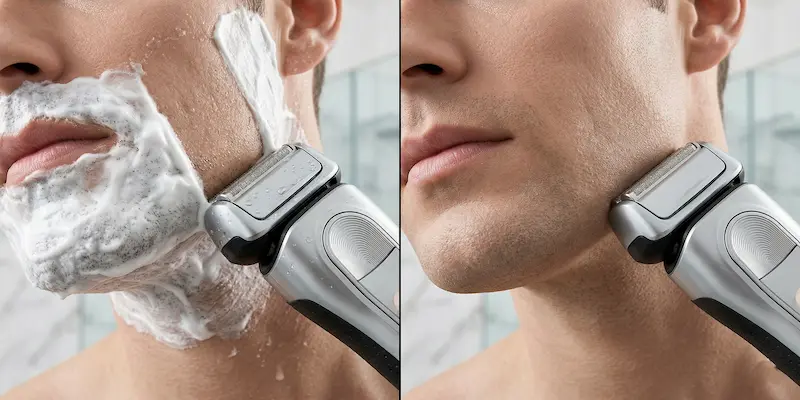
Table of Contents
- Wet vs. Dry — What's the Real Difference?
- When Should You Use Wet vs. Dry?
- The "Shower Myth": How Long to Wait After a Shower to Electric Shave?
- The Complete Pre-Shave Routine — Step by Step
- Why Pre-Shave Products Actually Reduce Irritation
- Pre-Shave Mistakes That Make Shaving Worse
- Wet vs. Dry for Specific Skin Problems
- Post-Shave Routine — Don't Skip This Part
- Frequently Asked Questions
Wet vs. Dry Electric Shaving — What's the Real Difference?
At the mechanical level, it comes down to one thing: lubrication. Wet shaving introduces a barrier — foam, gel, or water — between the foil and your skin. That barrier reduces friction, softens the hair before cutting, and makes each blade stroke produce less mechanical stress on the follicle.
Dry shaving removes that barrier entirely. The foil contacts skin directly. Blade glide depends on the quality of the shaver's cutting mechanism, the sharpness of the blades, and how much natural oil your skin produces. For some skin types, this is fine. For others, it's the direct cause of everything that goes wrong.
| Factor | Wet Shaving | Dry Shaving |
|---|---|---|
| Friction level | Low — lubricant creates blade glide | Medium to High — direct foil contact |
| Hair softening | Yes — moisture softens hair shaft before cutting | No — hair cuts in its natural state |
| Cutting efficiency | Slightly less close on first pass | Often closer on a single pass |
| Skin irritation risk | Lower — especially for reactive skin | Higher — no friction buffer |
| Acne safety | Better — foam reduces bacterial transfer | Depends entirely on shaver cleanliness |
| Ingrown hair risk | Lower — softened hair cuts cleanly at surface | Higher — dry hair more likely to snap below skin level |
| Convenience | Slower — requires prep and rinse | Fast — no prep needed |
| Required shaver type | Waterproof (IPX5 or higher) | Any electric shaver |
| Best for | Sensitive, acne-prone, or reactive skin | Normal skin, time-limited mornings |
When Should You Use Wet vs. Dry Electric Shaving?
Neither method is universally better. The right answer depends on your skin type, beard texture, and where your shaving problems actually appear.
💧 Choose Wet Shaving If:
- You have acne-prone skin — foam reduces the direct foil-to-skin bacterial contact that causes post-shave breakouts
- You experience consistent neck irritation — lubrication reduces the friction that triggers neck redness and follicle inflammation
- You get ingrown hairs regularly — moistened hair cuts more cleanly at surface level
- Your skin feels raw or tight after dry shaving — that's your skin barrier reacting to repeated friction
- You've been dry shaving for years and still have unresolved irritation despite trying different shavers
☀️ Choose Dry Shaving If:
- Your skin is resilient and you've never had consistent shaving irritation
- You shave in the morning before a shower and speed is the priority
- You travel frequently and carrying shaving cream is impractical
- You live in a very hard water area and wet shaving with tap water seems to worsen irritation
- Your beard is short (under 2mm) and cuts cleanly without preparation
The "Shower Myth": How Long to Wait After a Shower to Electric Shave?
There is a widespread grooming myth that you should use your electric shaver immediately after stepping out of a hot shower. For dry electric shaving, this is a terrible mistake.
Hot water and steam cause your skin to swell slightly, which physically hides the base of the hair follicles. Furthermore, the skin barrier is softer and far more vulnerable to the mechanical stress of a warm foil rubbing against it. If you are wondering how long to wait after a shower to electric shave, the golden rule is 15 to 30 minutes. This allows your skin to cool, contract, and become firm again, ensuring the hair stands upright for a cleaner, irritation-free cut. If you are in a rush, wash your face with cold water instead.
The Complete Pre-Shave Routine — Step by Step
A good pre-shave routine takes under two minutes and makes a measurable difference to both the quality of the shave and the skin's response afterward. Most people skip it entirely or do it wrong. These steps apply whether you wet or dry shave — the products differ, but the logic is the same.
1 Wash Your Face (But Know the Timing)
Washing removes excess sebum, dead skin, and bacteria from the skin surface — all of which interfere with clean cutting and increase post-shave irritation if pressed into follicles by the foil.
The timing detail most guides skip: don't shave immediately after a hot shower. Steam and hot water cause the skin to swell slightly and soften to the point where the follicle walls are more vulnerable to mechanical stress. Wait 20–30 minutes after a hot shower before shaving for drier, firmer skin that cuts more cleanly and reacts less.
For dry shaving specifically, washing your face and then drying completely before starting gives you the firmest skin state — which is what dry shaving performs best on. If you shave immediately after washing while the skin is still slightly damp, you've introduced moisture without the full lubrication benefit of wet shaving.
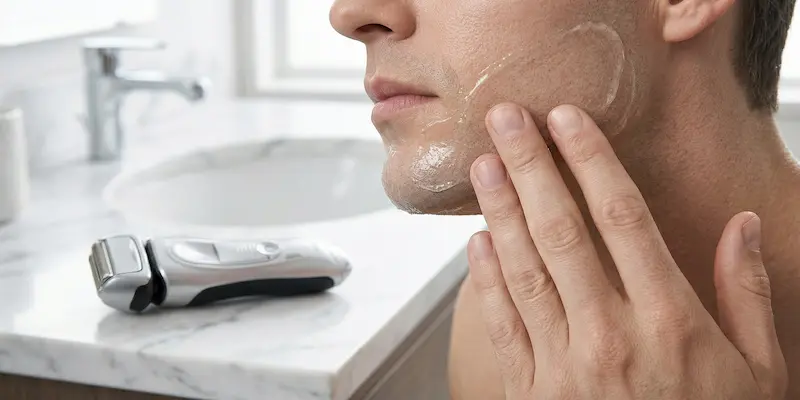
2 Apply the Right Pre-Shave Product
The product choice depends on your method.
For wet shaving: use a shaving gel or foam that's labeled non-comedogenic. Beware of your water source: if you use tap water in a coastal area, a hard water shaving cream lather will often be thin, bubbly, and ineffective at reducing friction due to the high mineral content reacting with the soap. In this case, a water-based, clear shaving gel works much better than traditional foam, preventing the foil from pressing comedogenic ingredients into open follicles.
For dry shaving: a pre-shave powder is more effective than oil or cream. Pre-shave powder — talcum-based or cornstarch-based formulas designed for electric shavers — absorbs excess moisture and helps stiff hairs stand upright for a cleaner cut. It also reduces foil-to-skin friction without introducing the slipperiness that can make dry shaver control awkward.
Pre-shave oil works for both methods, but use it sparingly — a single small drop per area, not a coating. Heavy oil application clogs foil slots and attracts hair fragments, which increases drag rather than reducing it.
3 Let It Sit (30–60 Seconds)
This step gets skipped almost universally. Shaving immediately after applying gel or foam reduces the hair-softening benefit by roughly 60%.
The chemistry is simple: moisture needs time to penetrate the hair shaft and swell it slightly. A swollen hair shaft is wider in diameter, which means it sits higher above the skin surface and feeds into the foil slot more easily. It also has reduced tensile strength at the cutting point, so the blade severs it with less force and less drag on the surrounding follicle.
30 seconds is the minimum. 60 seconds is better. If you rinse your face, apply gel, pick up your shaver, and start in one continuous motion, you've wasted the pre-shave product.
4 Check Your Shaver Is Wet-Compatible
This is the practical gate most people forget. Not all electric shavers can be used with water or shaving products.
A shaver rated IPX5 or higher is designed for wet use — it can handle running water and shaving foam without damaging the motor. A shaver without a waterproof rating, or rated below IPX5, is a dry-only device. Using foam on a dry-only shaver introduces moisture to unsealed motor housing and voids the warranty — while also degrading blade performance as the foam dries on the foil mesh.
Check your model's IPX rating before wet shaving. If it's IPX7, it can handle full submersion for cleaning. If it's unrated or below IPX5, keep it dry.
Why Pre-Shave Products Actually Reduce Irritation and Ingrown Hairs
The mechanical explanation is worth understanding because it changes how you apply products — not just whether you use them.
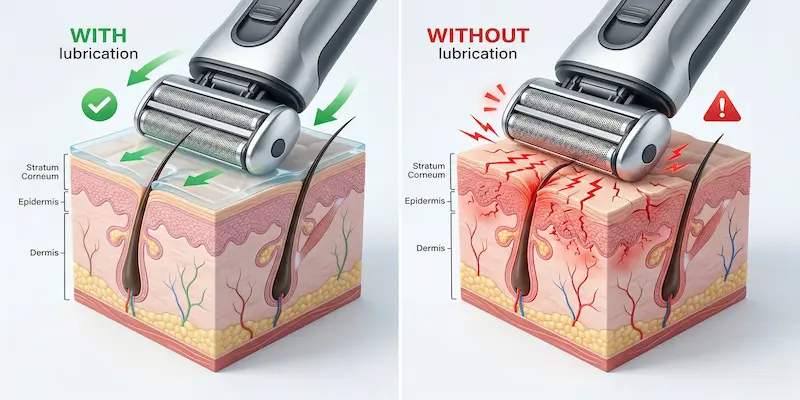
Without lubrication, the foil mesh contacts skin with a relatively high friction coefficient. Each oscillation of the blade assembly drags slightly against the skin surface. Over a full shaving session, this accumulates into micro-tears in the outermost skin layer — microscopic damage to the barrier that manifests as redness, tightness, or the burning sensation some people associate with 'sensitive skin.'
With a proper lubricant, the friction coefficient drops significantly. The foil glides rather than drags. Each blade stroke produces less lateral stress on the follicle wall. Hair gets cut with less torque applied to the follicle base — which is the mechanical reason wet shaving reduces ingrown hair formation. Less follicle torque means less chance of the hair tip being pushed sideways below the skin surface before it's severed.
The bacteria reduction benefit is separate but equally direct. Foam creates a physical barrier that keeps the foil's cutting surface slightly separated from the skin. Bacterial contamination from a dirty shaver head — which transfers directly to open follicles in dry shaving — is partially blocked by this foam layer. Not eliminated, but reduced enough to lower post-shave breakout frequency noticeably for acne-prone users.
Pre-Shave Mistakes That Make Shaving Worse
These are the errors that cancel the benefit of a good shaver, clean blades, and correct technique.
- Using comedogenic pre-shave products — standard body lotions, heavy beard oils, or cheap shaving foams with mineral oil content block follicles. The foam-plus-foil combination drives this material directly into the pore opening. Use products labeled non-comedogenic or specifically formulated for electric shavers.
- Shaving immediately after a hot shower — skin is slightly swollen and the follicle walls are mechanically weaker after steam exposure. The 20–30 minute wait makes a real difference to how the skin responds.
- Wet shaving with a dry-only shaver — introducing moisture to an unsealed motor housing doesn't just risk damage; it degrades the foil's cutting precision as the wet foam interferes with blade oscillation speed.
- Applying too much gel or foam — a thin, even layer is what you want. Thick foam buildup clogs foil slots, forces the motor to work against extra resistance, and reduces rather than improves cutting efficiency. Less is better.
- Skipping pre-shave entirely and then pressing harder to compensate — this is the most common error. The response to a pulling, dragging shave is almost always more pressure. More pressure on dry, unlubricated skin is the direct cause of neck redness, micro-tears, and ingrown hairs. The solution is lubrication, not force.
Wet vs. Dry Shaving for Specific Skin Problems
This is the decision table for people dealing with a specific issue rather than general sensitivity.
| Problem | Best Method | Why It Helps | Guide |
|---|---|---|---|
| Acne / post-shave breakouts | Wet | Foam reduces bacterial transfer from foil to open follicles | Acne & Ingrown Hairs Guide |
| Ingrown hairs | Wet | Softened hair cuts cleanly at surface — less below-skin tip formation | Acne & Ingrown Hairs Guide |
| Neck redness & irritation | Wet | Lubrication reduces per-stroke friction on thin neck skin | Best Shavers for Neck Guide |
| Whiteheads on neck | Wet | Foam barrier reduces follicle contamination during shave | Whiteheads on Neck Guide |
| Razor pulling / snagging | Either — fix blade issue first | Pre-shave helps but doesn't solve dull blades or buildup | Razor Pulling Hair Guide |
| Fast morning shave | Dry | No prep or rinse required — 3-minute total process | — |
| Hard water household | Dry (or filtered water wet) | Tap water leaves mineral film that worsens irritation | Hard Water Cleaning Guide |
Post-Shave Routine — Don't Skip This Part
The shave ends when you put the shaver down. What you do in the next 60 seconds determines whether your skin recovers cleanly or enters an inflammatory cycle.
1 Rinse With Cool Water
After wet shaving, rinse all foam residue completely — leftover surfactants from the gel stay on skin and can cause mild irritation if not removed. Use cool water, not cold — cold water causes capillary constriction that can trap debris in follicles; cool water closes pores gradually without shock.
After dry shaving, a quick cool water rinse still helps by removing loose skin cells and hair fragments that settle on the skin surface during the shave.
2 Apply an Alcohol-Free Aftershave Balm
This step matters more than most people give it credit for. Alcohol-based aftershaves feel like they're doing something (the sting is feedback). What they're actually doing is stripping the skin barrier at the moment it's most vulnerable — immediately after mechanical friction has already disrupted it.
An alcohol-free balm with simple, non-comedogenic ingredients (aloe vera, niacinamide, panthenol) supports barrier recovery without introducing additional irritants. Apply within 60 seconds of finishing the shave while follicles are still slightly open and the skin is most receptive.
3 Don't Touch Your Face
Fingers carry bacteria. Freshly shaved skin has temporarily disrupted follicles that are more susceptible to contamination than usual. The 24-hour rule — avoiding touching the shaved area with bare hands for a day — is the simplest free intervention for reducing post-shave breakouts, particularly on the neck.
Frequently Asked Questions
For most people with acne-prone skin, yes. The foam or gel creates a physical barrier that reduces direct foil-to-skin contact, which lowers the rate at which bacteria from the shaver head reaches open follicles during shaving. It also reduces friction-related micro-tears — the entry points for bacterial infection. The caveat: using a comedogenic foam cancels this benefit. Make sure any product used is labeled non-comedogenic, and the shaver still needs regular alcohol spray cleaning regardless of wet vs dry method.
Only if your shaver is rated for wet use — IPX5 or higher. A wet-rated shaver can handle foam, gel, and running water without damage. Using shaving cream on a dry-only shaver introduces moisture to an unsealed motor housing and clogs the foil mesh as the cream dries. For wet-rated shavers, a thin clear gel works better than thick cream foam — less product, better foil contact, easier to rinse.
Yes, through two mechanisms. First, moisture softens the hair shaft before cutting — softened hair has lower tensile strength at the cut point, so the blade severs it cleanly at the surface with less follicle torque. Less torque means less chance of the hair tip being deflected below the skin line. Second, the lubricating layer reduces the foil's lateral drag, which decreases the sideways pressure on hair during cutting — another factor in below-skin-level tip placement. The effect is most pronounced when gel is left on the skin for 30–60 seconds before shaving.
Not always — but it's a higher-risk default. Dry shaving removes the friction buffer that protects reactive skin from the cumulative mechanical stress of foil contact. On resilient skin with well-maintained blades, this is manageable. On sensitive, thin, or already-irritated skin, dry shaving accelerates the micro-tear accumulation that leads to redness, tight skin, and follicle inflammation. If you've been dry shaving and experiencing consistent irritation, switching to a non-comedogenic gel wet routine for two weeks is the most efficient way to isolate whether the method or the shaver is the primary cause.