Introduction
You finally installed a water softener after years of struggling with dull, coated hair. The anticipation builds as you step into the shower for that first wash with soft water. You lather up, expecting luxurious, clean hair—and instead, your hair feels strangely slippery, almost slimy. You rinse and rinse, but it still doesn't feel clean. By the next day, your hair is limp, lifeless, and somehow looks greasy despite feeling too soft.
What happened? Did you buy the wrong shampoo? Is something wrong with your hair? Or did switching from hard to soft water just trade one set of problems for another?
This confusion is far more common than most articles admit. The internet is full of advice telling you that hard water is bad and soft water is the solution, but real-world experiences tell a different story. Thousands of people install water softeners expecting miraculous hair transformation, only to find themselves frustrated with unexpected results that nobody warned them about.
The truth is more nuanced than "hard water bad, soft water good." Each water type creates distinct challenges for hair, and understanding these differences—especially the strange sensations soft water creates—is essential for maintaining healthy hair regardless of which type flows from your shower.
Table of Contents
- Introduction
- What Is Hard Water vs Soft Water?
- How Hard Water Affects Hair: The "Dry but Greasy" Problem
- How Soft Water Affects Hair: The Slimy Feeling Paradox
- Hard Water vs Soft Water: Side-by-Side Comparison
- Which One Is Actually Worse for Hair?
- How to Adjust Your Hair Routine Based on Your Water Type
- Frequently Asked Questions
- Conclusion
What Is Hard Water vs Soft Water?
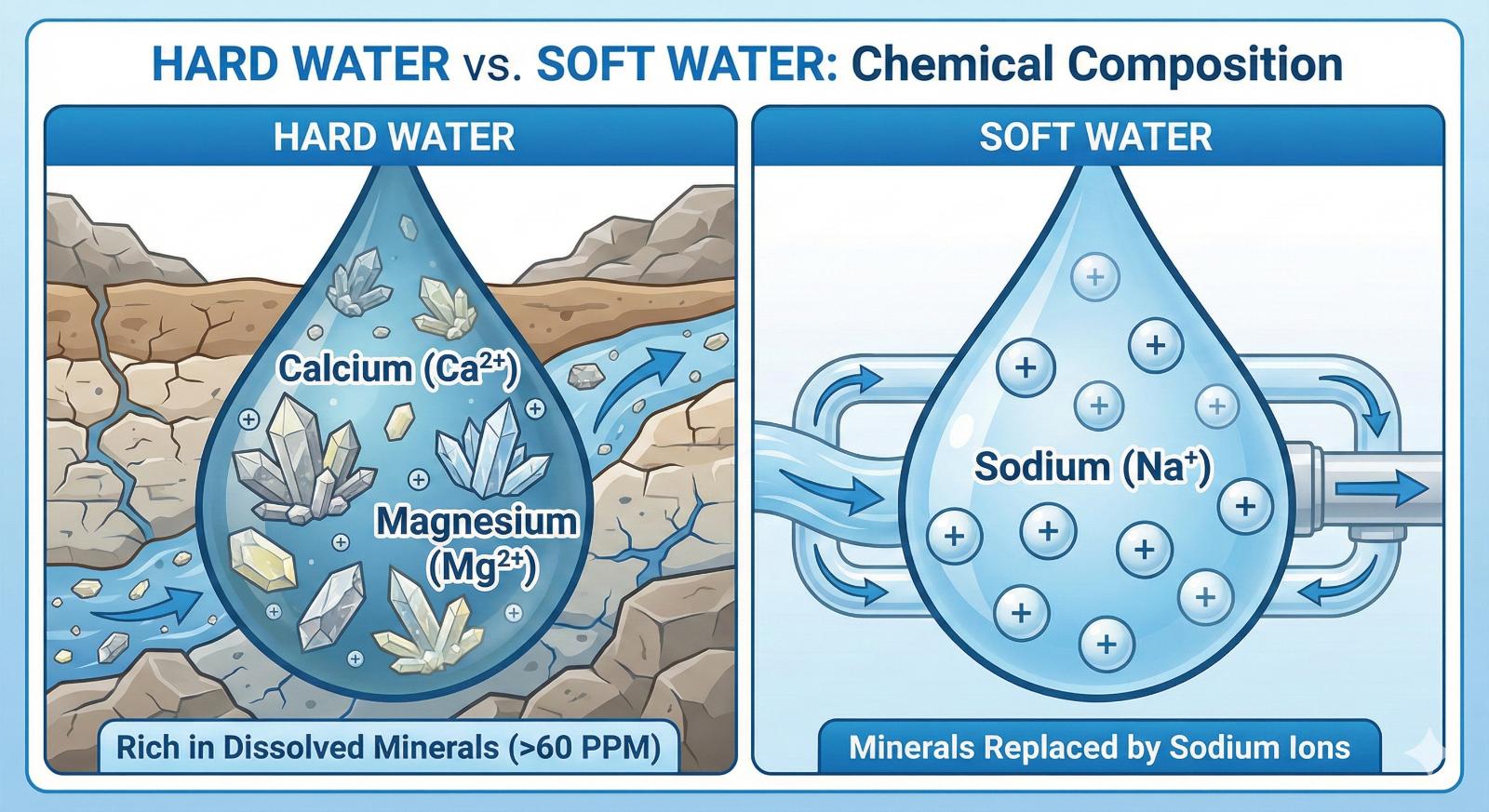
The distinction between hard and soft water comes down to mineral content, specifically the concentration of calcium and magnesium ions dissolved in the water.
Hard water contains high levels of these minerals, typically measuring above 60 parts per million (ppm) or 3.5 grains per gallon (gpg). As groundwater passes through limestone, chalk, and gypsum deposits, it picks up calcium carbonate, magnesium, and sometimes iron. These minerals remain dissolved in the water that reaches your home, creating the characteristic "hardness" that affects everything from soap performance to appliance longevity.
Soft water has had these hardness minerals removed or was naturally low in mineral content from the source. Most soft water results from water softening systems that use ion exchange technology—replacing calcium and magnesium ions with sodium or potassium ions. The resulting water contains minimal hardness minerals but elevated sodium content instead.
The key difference isn't just about which minerals are present, but how these different mineral compositions interact with hair proteins, soap chemistry, and the natural oils your scalp produces. This interaction explains why switching between water types creates such dramatically different experiences.
How Hard Water Affects Hair: The "Dry but Greasy" Problem
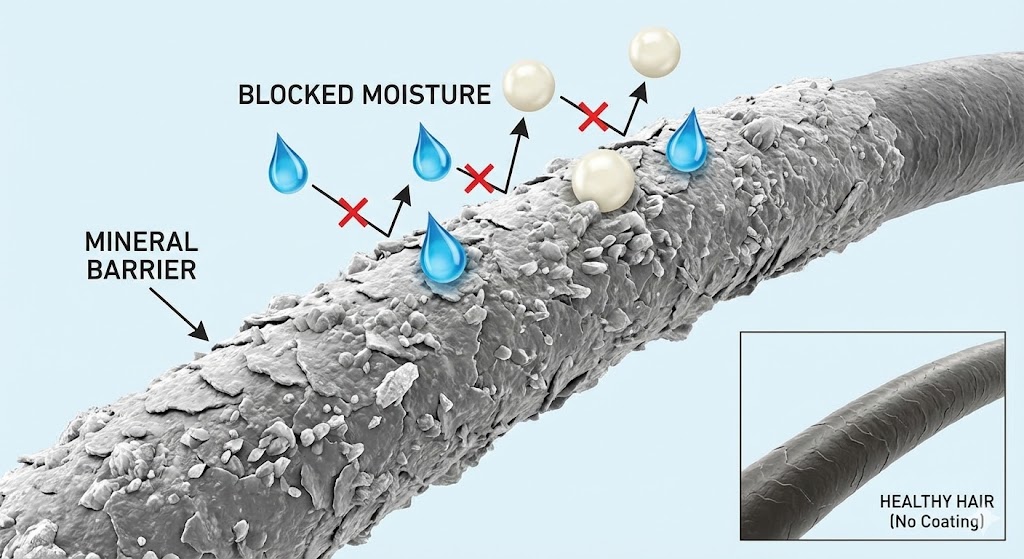
Hard water creates a distinctive pattern of damage that worsens progressively over time. The minerals in hard water don't just rinse away—they bond chemically to the keratin proteins in your hair shaft, creating layers of buildup that resist removal by regular shampooing.
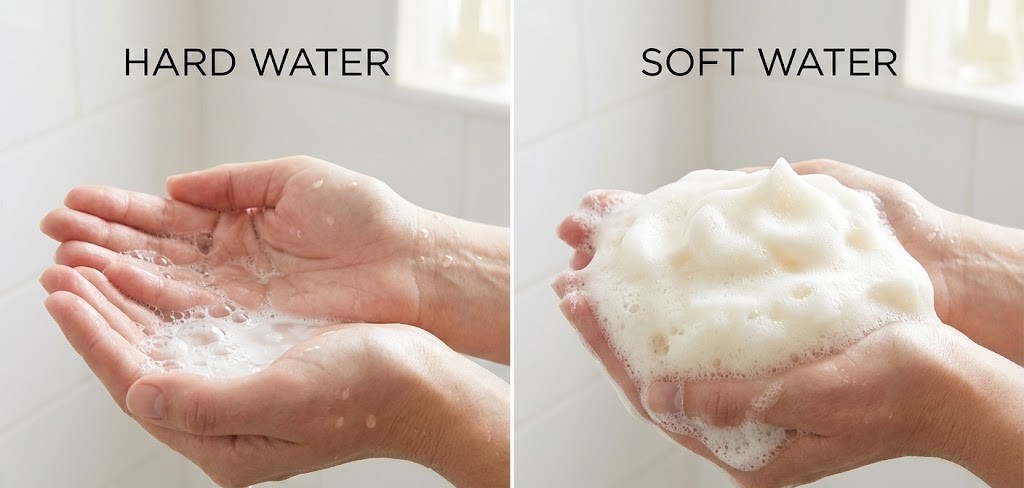
Poor lathering is usually the first sign. Shampoo struggles to create rich, creamy foam because the minerals interfere with surfactant effectiveness. You end up using more product to achieve adequate cleansing, which can lead to product buildup on top of mineral deposits.
Persistent coating develops as calcium and magnesium accumulate with each wash. This invisible layer makes hair feel waxy, rough, or strangely textured even immediately after shampooing. The coating blocks moisture from penetrating the hair shaft and prevents conditioning ingredients from working effectively.
The characteristic paradox of hard water damage is hair that feels simultaneously dry and greasy. The mineral deposits disrupt your scalp's natural oil distribution, trapping sebum at the roots while the lengths remain parched. Your roots become noticeably oily within hours of washing, yet your ends look dull, feel brittle, and show all the signs of severe dryness.
Product resistance frustrates most people with hard water. Your favorite conditioner seems to stop working. Deep conditioning masks provide minimal benefit. Even expensive salon treatments deliver disappointing results. The problem isn't the products—it's the mineral barrier preventing them from reaching your hair.
This damage mechanism and why it creates such confusing, contradictory symptoms deserves deeper exploration. For a complete scientific breakdown of how mineral buildup affects every aspect of hair health, see How Hard Water Damages Hair (And Why It Feels Dry & Greasy at the Same Time).
How Soft Water Affects Hair: The Slimy Feeling Paradox
This is where most articles fail to prepare you for reality. Soft water creates sensations and experiences that feel wrong, even though technically your hair is cleaner than it's ever been.
The Excessive Lather
Shampoo in soft water produces enormous amounts of foam—far more than you're probably accustomed to if you've lived with hard water. A quarter-sized amount creates enough lather to wash your hair two or three times over. This isn't because the shampoo formula changed or you're using too much. It's because soft water allows surfactants to work at their full potential without minerals interfering.
Many people instinctively add more shampoo, thinking the excessive foam means something is wrong. This leads to over-cleansing and contributes to the next problem.
The Slimy, Won't-Rinse-Out Feeling
This is the most disturbing aspect of soft water for new users. Your hair feels slippery, almost slimy, as you rinse. It seems like the shampoo won't wash out no matter how long you rinse. The sensation is so unsettling that many people assume something has gone wrong—the water softener is malfunctioning, the shampoo is bad, or their hair is damaged.
Here's the truth that changes everything: Soft water doesn't make your hair dirty—it changes how "clean" feels.
With hard water, you're accustomed to that squeaky, slightly rough feeling after shampooing. That sensation isn't cleanliness—it's mineral deposits gripping your hair shaft. It feels "clean" because the coating creates friction and texture. When you remove those minerals with soft water, your hair shaft becomes genuinely smooth for the first time. The slippery feeling is actually what clean hair feels like without mineral coating.
The apparent difficulty rinsing shampoo out is an illusion. Soft water rinses soap away far more efficiently than hard water ever could. What you're feeling is your hair's natural smoothness, not residual shampoo. The conditioning agents in your shampoo can actually work now, and your hair's cuticle lies flatter, both contributing to that slippery sensation.
The Flat, Lifeless Hair Problem
After adjusting to the rinsing sensation, many people encounter the next soft water challenge: their hair has no body, won't hold style, and looks flat despite being clean. Fine or thin hair suffers most dramatically, but even thick hair can lose volume and texture.
This happens because minerals in hard water, while damaging, did provide some texture and "grip" that helped hair hold volume and styling. Soft water removes that structure entirely. Your hair is softer, smoother, and more flexible—which sounds ideal until you realize it won't maintain any volume or hold curl.
The weight perception changes too. Without minerals adding stiffness, hair falls flatter against the head. Products that provided light hold in hard water now provide almost none because the hair is so smooth that nothing has texture to grab onto.
Common Mistakes That Make It Worse
The instinctive responses to soft water sensations often compound the problems:
Using more shampoo because of the excessive lather or slimy feeling leads to over-stripping. You don't need more product—you need less. A dime-sized amount is often sufficient where you previously needed a quarter-sized dollop.
Rinsing excessively trying to remove that slippery feeling actually strips beneficial oils and can leave hair dry despite the smooth sensation. Learn to trust that the slippery feeling means clean, not dirty.
Continuing to use heavy products formulated to combat hard water dryness becomes overwhelming in soft water. Those rich conditioners and heavy oils that barely made a dent against mineral buildup now coat your hair excessively, making it greasy and limp.
Washing more frequently because hair looks flat or feels strange only makes the problem worse by stripping more oils and preventing your scalp from adjusting its oil production to the new water chemistry.
The key insight: Soft water isn't worse than hard water—it's just different and requires a complete routine adjustment.
Hard Water vs Soft Water: Side-by-Side Comparison
Understanding the specific differences helps you identify which water type you have and what adjustments your routine needs.
| Factor | Hard Water | Soft Water |
|---|---|---|
| Shampoo lather | Weak, thin, disappears quickly | Very strong, abundant, long-lasting |
| Rinse time needed | Short (minerals prevent thorough rinsing anyway) | Longer (smooth feeling makes you over-rinse) |
| Hair feel after washing | Dry, coated, squeaky, rough texture | Soft, slippery, smooth, almost too soft |
| Scalp condition | High buildup, itchy, irritated from minerals | Low buildup, but may overproduce oil initially |
| Styling results | Hair holds style but looks dull, lacks shine | Hair is shiny but won't hold volume or style |
| Product effectiveness | Products blocked by mineral barrier | Products work too well, easy to over-condition |
| Color-treated hair | Fades quickly, brassy tones develop | Color lasts longer, maintains true tone |
| Curl/wave pattern | Becomes frizzy, undefined, disrupted | Becomes too soft, loses definition differently |
| Time to air dry | Longer (minerals weigh hair down) | Normal to faster (no mineral weight) |
| Common complaint | "My hair feels coated and looks dull" | "My hair feels slimy and has no body" |
This table reveals that neither water type is objectively "better"—each presents distinct challenges requiring different approaches.
Which One Is Actually Worse for Hair?
The honest answer: Neither is universally worse—what's worse is not knowing how to work with the water type you have.
Hard water causes cumulative structural damage through mineral buildup, cuticle disruption, and moisture blocking. This damage compounds over months and years, progressively worsening hair health. The effects are measurable and visible: increased breakage, persistent dullness, texture changes, and that characteristic dry-yet-greasy condition.
Soft water doesn't damage hair in the same structural way, but it creates immediate cosmetic and styling challenges that many people find equally frustrating. The adjustment period can be difficult, and if you don't modify your routine appropriately, you can end up with limp, flat, over-conditioned hair that looks greasy within hours.
For naturally thick, coarse, or curly hair: Soft water generally works better once you adjust your routine. The smoothing effect helps manage frizz, and the improved product penetration allows proper moisture balance. Hard water tends to exacerbate texture problems and create severe buildup in textured hair patterns.
For fine, thin, or naturally straight hair: The answer is less clear. Hard water's texture-adding minerals can actually help with volume, though the damage and buildup are undesirable. Soft water creates beautiful smoothness but removes the natural grip and body that fine hair needs for styling. Many people with fine hair find they need to carefully balance between these extremes.
For color-treated or chemically processed hair: Soft water is definitively better. Hard water minerals interfere with chemical treatments, cause rapid color fading, and create brassy or muddy tones. Soft water allows colors to develop true to formula and last significantly longer.
For damaged or fragile hair: Soft water is generally preferable because it doesn't add the additional stress of mineral coating and allows conditioning treatments to actually penetrate and repair. However, you must adjust products to avoid over-conditioning, which can make damaged hair look worse despite being technically healthier.
The real question isn't which water type is worse, but how to optimize your routine for whichever type you have. For comprehensive guidance on building the right routine for hard water specifically,see Best Hair Care Routine for People Living in Hard Water Areas(Coming soon).
If you're considering water treatment solutions to address these issues, understanding what shower filters can and cannot do is essential. Explore the realistic benefits and limitations here: Do Shower Filters Really Help With Hair Loss & Hard Water?
How to Adjust Your Hair Routine Based on Your Water Type
Success with either water type requires tailoring your entire approach—products, techniques, and expectations—to work with your water's characteristics rather than against them.
For Hard Water Hair Care
Prioritize chelating treatments: Use chelating shampoos containing EDTA, citric acid, or other chelating agents once or twice weekly to actively remove mineral deposits. This is non-negotiable for maintaining hair health in hard water areas.
Clarify regularly: Incorporate periodic clarifying treatments to remove both mineral and product buildup. The frequency depends on your water's hardness level—anywhere from weekly to monthly.
Deep condition consistently: Because hard water blocks moisture, intensive conditioning after every chelating treatment helps restore hydration and flexibility. Focus conditioner on mid-lengths to ends, avoiding roots where buildup concentrates.
Consider water treatment: Shower filters or water softeners provide preventive protection by reducing new mineral deposits, though they don't address existing buildup. Evaluate whether the investment makes sense for your situation.
Adjust product amounts: You'll likely need more shampoo to achieve adequate lather and more conditioner to combat dryness. This isn't wasteful—it's necessary to work against mineral interference.
For Soft Water Hair Care
Reduce shampoo quantity dramatically: Start with half the amount you used with hard water. The enhanced lathering means a little goes much further, and excess stripping contributes to the greasy rebound effect.
Extend rinse time initially: Until you adjust to what "clean" feels like in soft water, rinse longer than seems necessary. This helps you trust the slippery feeling rather than fighting it with more product.
Switch to lightweight products: Heavy conditioners and rich masks that barely worked in hard water become overwhelming in soft water. Choose volumizing or lightweight formulas, and apply sparingly.
Wash less frequently: Soft water cleans so efficiently that daily washing becomes over-stripping. Most people can extend to every other day or even less, allowing natural oils to provide the texture soft water removes.
Add texture strategically: Use dry shampoo, texturizing sprays, or sea salt sprays to restore the grip and body that mineral-free water eliminates. These products work better in soft water than they ever did in hard water.
Consider acidic rinses: A diluted apple cider vinegar rinse can help close the cuticle and reduce the slippery feeling if it bothers you, though many people eventually grow to appreciate the smoothness.
Adjust gradually: Don't change everything at once. Modify one aspect of your routine at a time—shampoo amount, then conditioner type, then washing frequency—so you can identify what works for your specific hair.
The most important insight for both water types: The problem isn't usually the water itself—it's using a routine designed for a different water chemistry.
Frequently Asked Questions
Conclusion
The debate over whether hard water or soft water is worse for hair misses the fundamental point: both create distinct challenges, and success depends on understanding and working with whichever type you have rather than wishing for the other.
Hard water causes progressive structural damage through mineral accumulation. It blocks products, disrupts oil distribution, and creates that characteristic coated feeling that makes hair look dull and feel simultaneously dry and greasy. The damage is real, measurable, and compounds over time without proper intervention.
Soft water doesn't damage hair structurally but creates an adjustment challenge many people aren't prepared for. The slimy feeling, excessive lather, flat appearance, and initial greasiness shock people expecting miraculous transformation. These aren't signs of damage—they're signs that your routine needs complete recalibration for a different water chemistry.
The real insight: The problem isn't the water type—it's the mismatch between your water and your routine.
If you have hard water and haven't adjusted your routine to include chelating treatments, you'll struggle regardless of which products you buy. If you have soft water and keep using the heavy, intensive products you needed for mineral damage, you'll fight greasiness and limpness indefinitely.
Understanding your water type is the first step. Adjusting your expectations, products, and techniques to match that water chemistry is what actually solves the problem.
Start by understanding your water before changing all your products. Once you know what you're working with, the path to healthy, manageable hair becomes clear.
For comprehensive guidance on addressing hard water damage specifically and building an effective routine, explore our complete guide: Hard Water Is Ruining Your Hair: Causes, Symptoms & Proven Fixes