Table of Contents
You've done everything right. You bought a quality brush, a well-reviewed soap, and you've watched enough tutorials to know what good lather is supposed to look like. But every morning, something goes wrong. The lather collapses before you finish the first pass. Your face feels dry and tight after the shave. The razor drags instead of glides.
Here's what nobody told you: the problem isn't your soap, your brush, or your technique. The problem is coming out of your faucet.
Hard water is the silent saboteur of millions of shaving routines. And the fix doesn't require a new product, a water softener, or any special equipment. It requires a $4 bottle of distilled water from the supermarket — or a pinch of citric acid that costs pennies per shave.
Already know the hard water basics and just want the right soap? Check out our full breakdown of the best shaving creams and soaps for hard water — including which formulas contain EDTA for a data-backed product guide built on 340+ real Reddit comments.
Troubleshooting: Why Your Shaving Foam Dries Too Fast
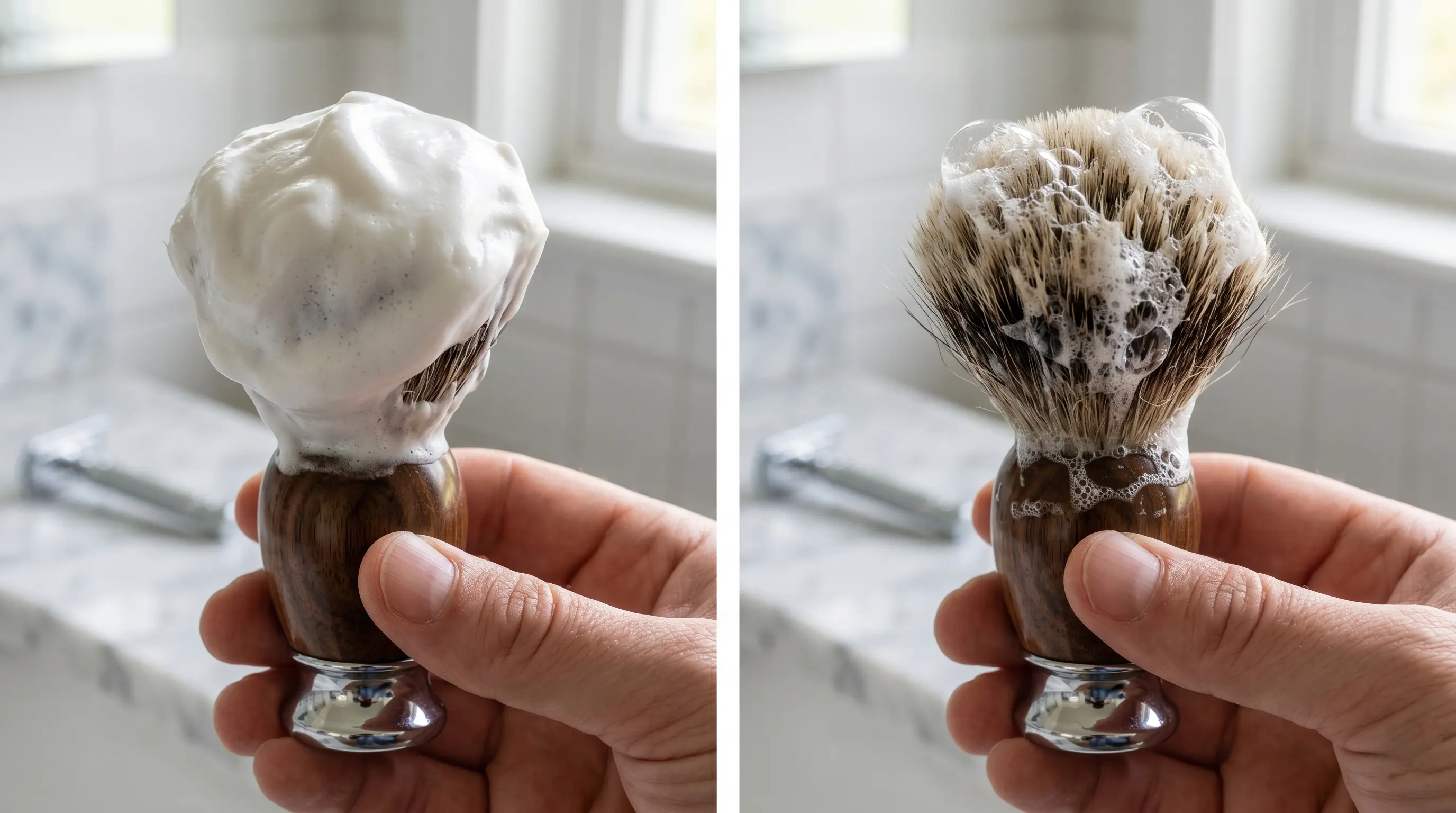
If you've ever watched your lather fall apart in the middle of a shave — going from dense and glossy to thin and foamy within 60 seconds — you've experienced what hard water does to shaving soap in real time.
The cause is a straightforward chemical reaction. Hard water contains elevated concentrations of calcium (Ca²⁺) and magnesium (Mg²⁺) ions, both carrying a +2 electrical charge. Shaving soap is built on potassium or sodium fatty acid salts. When those salts come into contact with hard water, the calcium and magnesium ions bond with the fatty acids before the lather can form properly — producing insoluble calcium and magnesium soap compounds instead of the rich, airy foam you're trying to build.
The result is what the wet-shaving community calls soap scum in your lather: a gray, curd-like residue that provides almost no cushion or protection. The water molecules that should be trapped inside the foam structure evaporate rapidly because the foam itself never formed correctly. That's why your shaving foam dries too fast — it was never truly foam to begin with. It was a failed chemical reaction sitting on your face.
The harder your tap water, the more severe this effect. And in many parts of the United States and Europe, tap water is hard enough to almost completely prevent quality lather from forming with even premium shaving soaps.
The downstream effects go beyond one bad shave:
- Razor drag caused by inadequate lubrication leads to razor burn, irritation, and post-shave breakouts — a problem covered in detail in our companion guide on hard water razor burn and how to fix it.
- Mineral deposits left on your razor blade after each shave accelerate blade dulling significantly — see our full investigation into whether hard water dulls razor blades faster.
- Hard water mineral buildup inside your shaving brush causes hair breakage and shedding over time — detailed in the forum data section below.
The good news is that all of these problems share the same root cause — and the same root solution.
The Pure Method: Experiencing a Distilled Water Shave
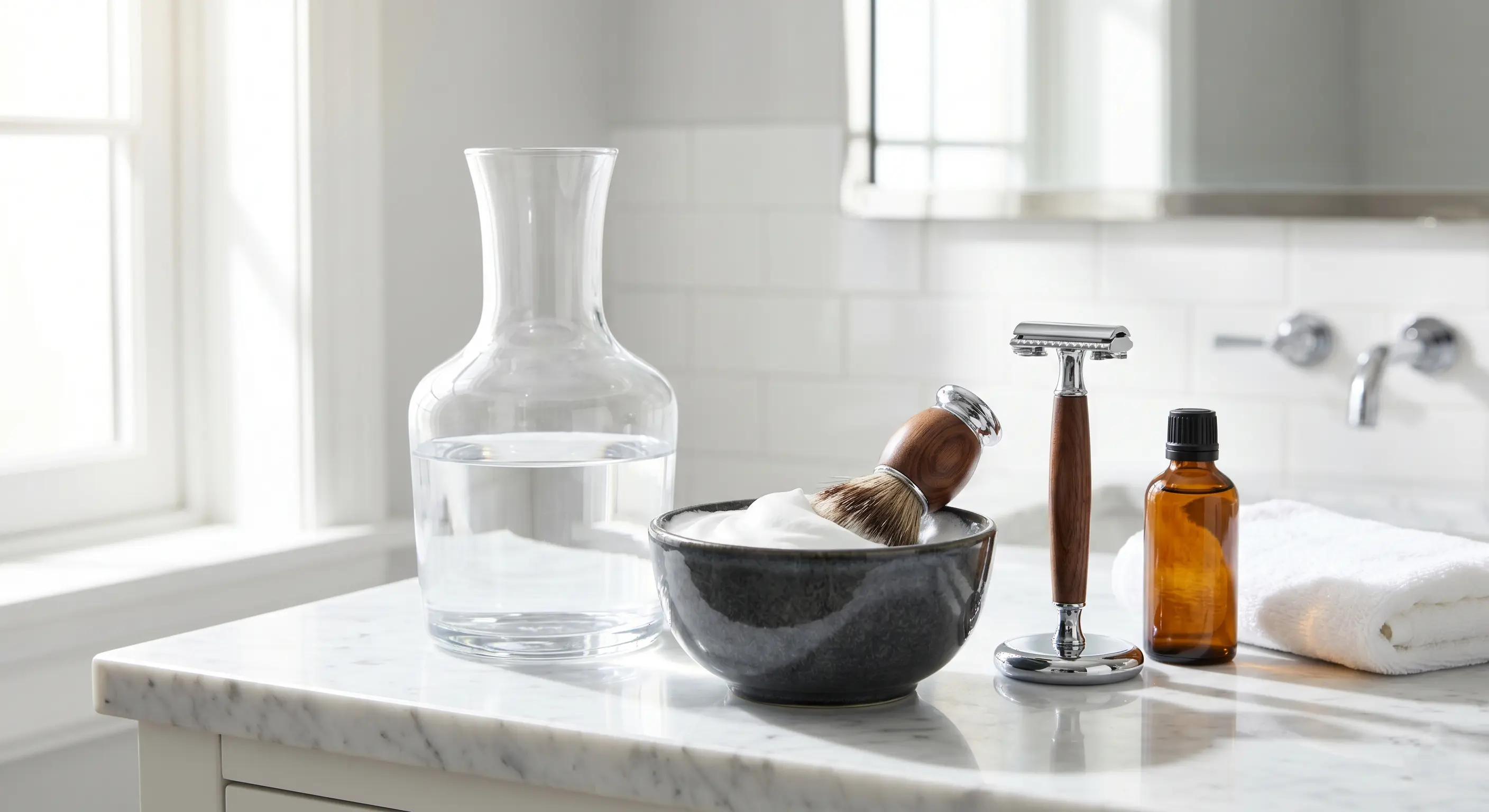
The most direct solution to the hard water problem is to remove the hard water from the equation entirely.
Distilled water has had its mineral content stripped out through evaporation and condensation. There are no calcium ions. No magnesium ions. Nothing left to react with your soap's fatty acids. When you build lather with distilled water, you are experiencing what your soap was actually designed to produce — which is often dramatically different from what you've been getting at the sink.
Shavers who try a distilled water shave for the first time frequently describe it as a revelation. The lather is denser, wetter, shinier, and more stable. It doesn't collapse between passes. It provides real cushion. If you've been wondering why reviews of a particular soap seem glowing while your experience has been mediocre, this is almost certainly why.
What You Need
- One bottle of distilled water — sold at any grocery store or pharmacy for $1–2 per gallon. Also labeled "purified water" in some regions. Check that the mineral content reads 0 ppm or "none detected."
- Your existing brush, soap, and bowl — nothing else changes.
How to Do a Distilled Water Shave
The process is identical to your normal routine with one substitution:
- Before your shave: Pour about ½ cup of distilled water into a small cup or mug. If you prefer a warm lather, heat it in the microwave for 15–20 seconds until comfortably warm to the touch. Do not boil it.
- For brush soaking: Instead of running your brush under the tap, submerge the knot in your cup of distilled water for 1–2 minutes.
- For loading and lather building: Load your soap as normal, then build the lather using the distilled water already in the brush. If you need to add water during lather building, add it from the distilled water cup — a few drops at a time — rather than running the brush back under the tap.
- Everything else stays the same. Your soap, your brush technique, your bowl — none of it changes.
What to Expect
The change in lather quality can be significant, especially if your tap water is very hard. The lather will likely be denser and more stable (holding its structure throughout the shave), glossier in appearance (a sign the soap's oils and fats are emulsifying properly), and more hydrating on the skin. Most shavers who adopt the distilled water method do it consistently once they experience the difference. A gallon of distilled water costs less than $2 and provides weeks to months of shaves — one of the cheapest upgrades in the entire hobby.
The Chemist's Secret: Creating a Citric Acid Shaving Lather
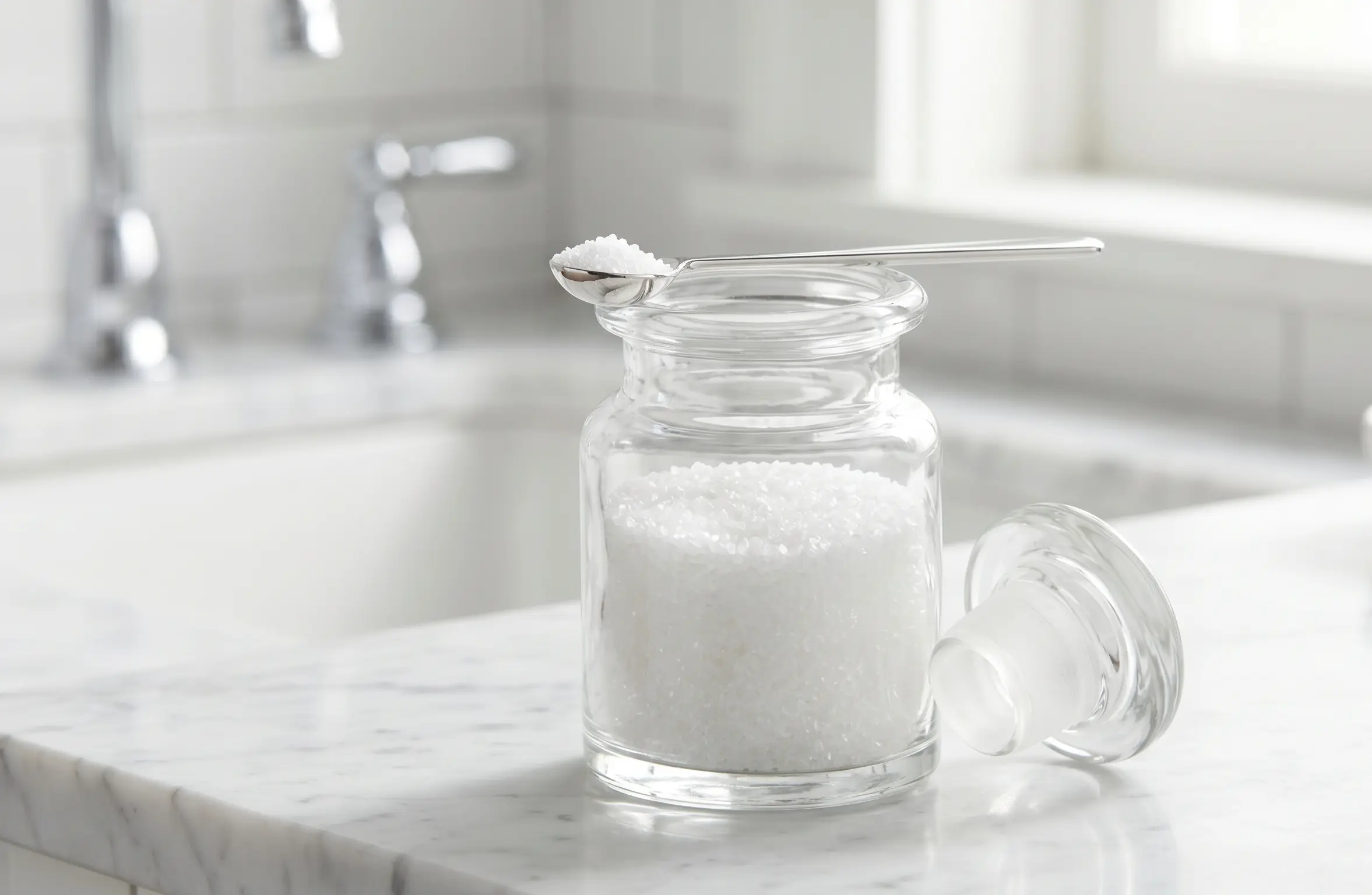
Distilled water is the cleanest solution, but it requires planning — remembering to buy it, keeping it stocked, heating it separately. For many shavers, that friction point breaks the habit.
Citric acid solves this problem. It's cheaper, more convenient, and works on a fundamentally different mechanism: instead of replacing your tap water, citric acid neutralizes the minerals inside your tap water so they can't interfere with the soap.
Citric acid is an organic acid found naturally in citrus fruits. It functions as a chelating agent — it binds to metal ions like calcium and magnesium and locks them into a stable, harmless complex. Once bound, those ions can't react with your soap's fatty acids. The water coming out of your tap is still the same water, but the minerals inside it have been chemically deactivated.
The result is a citric acid shaving lather that builds, behaves, and performs almost identically to one made with distilled water — using water directly from your tap.
Why Citric Acid Instead of White Vinegar?
White vinegar (acetic acid) does dissolve mineral deposits effectively. But acetic acid's volatile organic sulfur compounds chemically bond with natural animal hair — badger, boar, or horse — and create a persistent sour odor that reactivates every time the brush gets wet and warm. If you've ever cleaned a natural-hair brush with vinegar and noticed a faint sour smell returning every shave, that's exactly what happened.
Citric acid monohydrate is completely odorless. It strips mineral deposits with the same efficiency as vinegar, dissolves fully in water without residue, and has no interaction with natural brush hair. It costs a few dollars for enough to last years. There is essentially no downside to choosing it over vinegar for shaving applications.
Step-by-Step Guide: How to Lather Shaving Soap in Hard Water
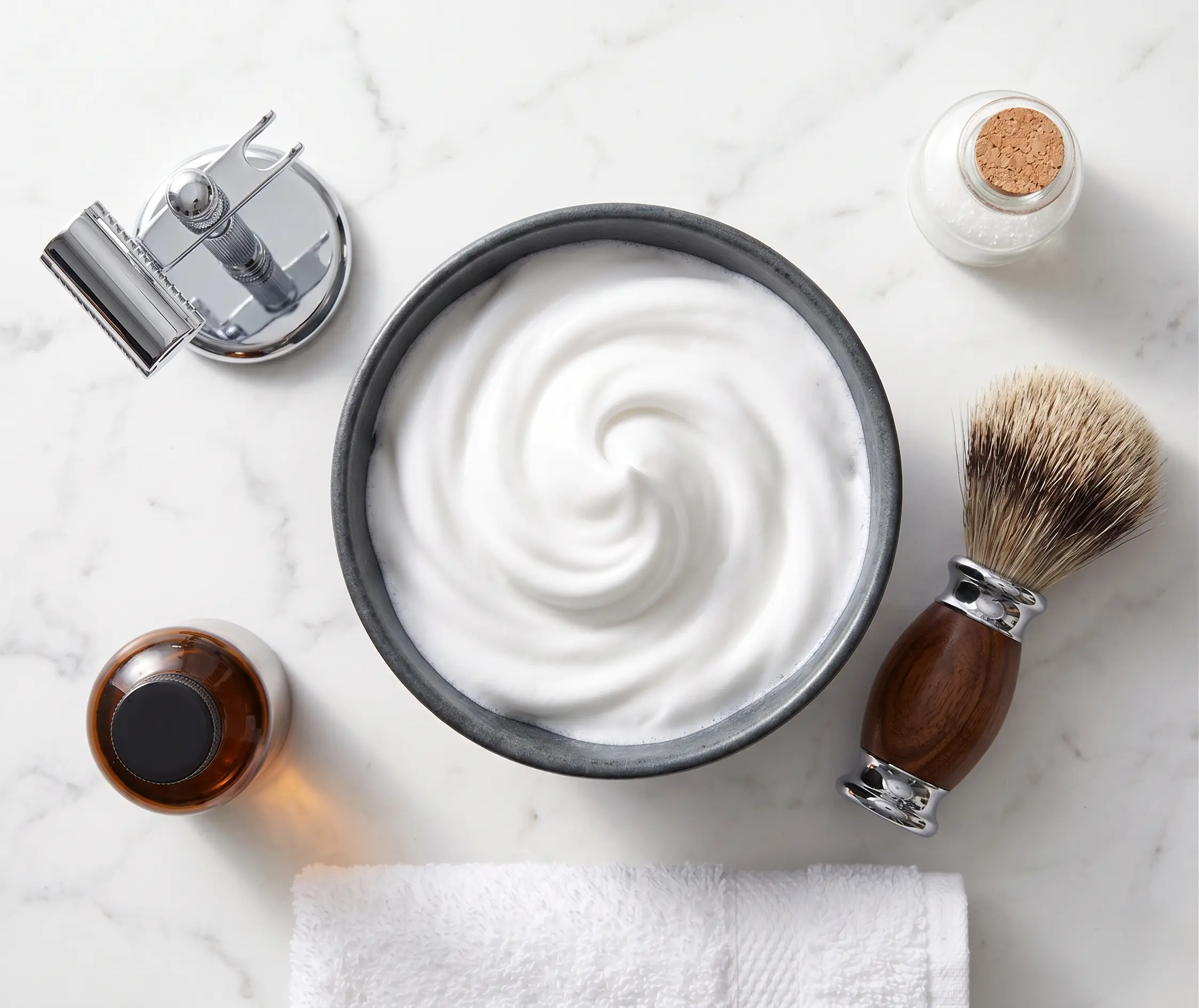
Here is the complete process for building dense, stable lather in hard water using the citric acid method. Follow these steps exactly for best results.
-
1Fill your shaving bowl with warm tap water
Use water that's comfortably warm — about the same temperature you'd use to wash your face. Fill the bowl about halfway. You'll use this water to pre-soak your brush and to add water during the lather-building process.
-
2Add citric acid and dissolve completely
Add a very small pinch of citric acid crystals — approximately the size of a lentil, roughly ¼ to ⅓ of a teaspoon. Stir the water with your finger or a small spoon until the crystals dissolve completely. The water will not change color or smell. You should see no undissolved particles remaining.
The goal is a mild chelating effect, not an acidic solution. More is not better — excessive citric acid can lower the water's pH enough to irritate sensitive skin or interfere with the soap's ability to lather. Stick to a small pinch. If your skin feels tight or stings after the shave, reduce the amount next time.
-
3Soak your brush in the treated water
Submerge the knot of your brush in the bowl and let it soak for 60–90 seconds. This saturates the bristles with the citric-acid-treated water from the start, ensuring no untreated tap water is carried into the lather.
-
4Load your soap as normal
Shake out the excess water from your brush — you want the knot damp but not dripping. Load your soap using your normal technique. For a cream, load for about 15–20 seconds. For a hard puck, load for 30–45 seconds with light circular motions.
-
5Build the lather in the bowl, adding water gradually
Start working the brush in the bowl to build the lather. As the lather thickens, add small amounts of water from your bowl — literally 2–3 drops at a time — until you reach the right consistency. You're aiming for a texture similar to thick, peak-able yogurt: glossy, dense, and able to hold its shape when you lift the brush. If it collapses or looks foamy and bubbly, it needs more soap. If it feels dry or stiff, it needs more water.
-
6Apply and shave normally
Apply the lather to your face using the brush in circular motions. The lather should paint on smoothly and stay put — not run off the face or collapse immediately. Proceed with your normal shave.
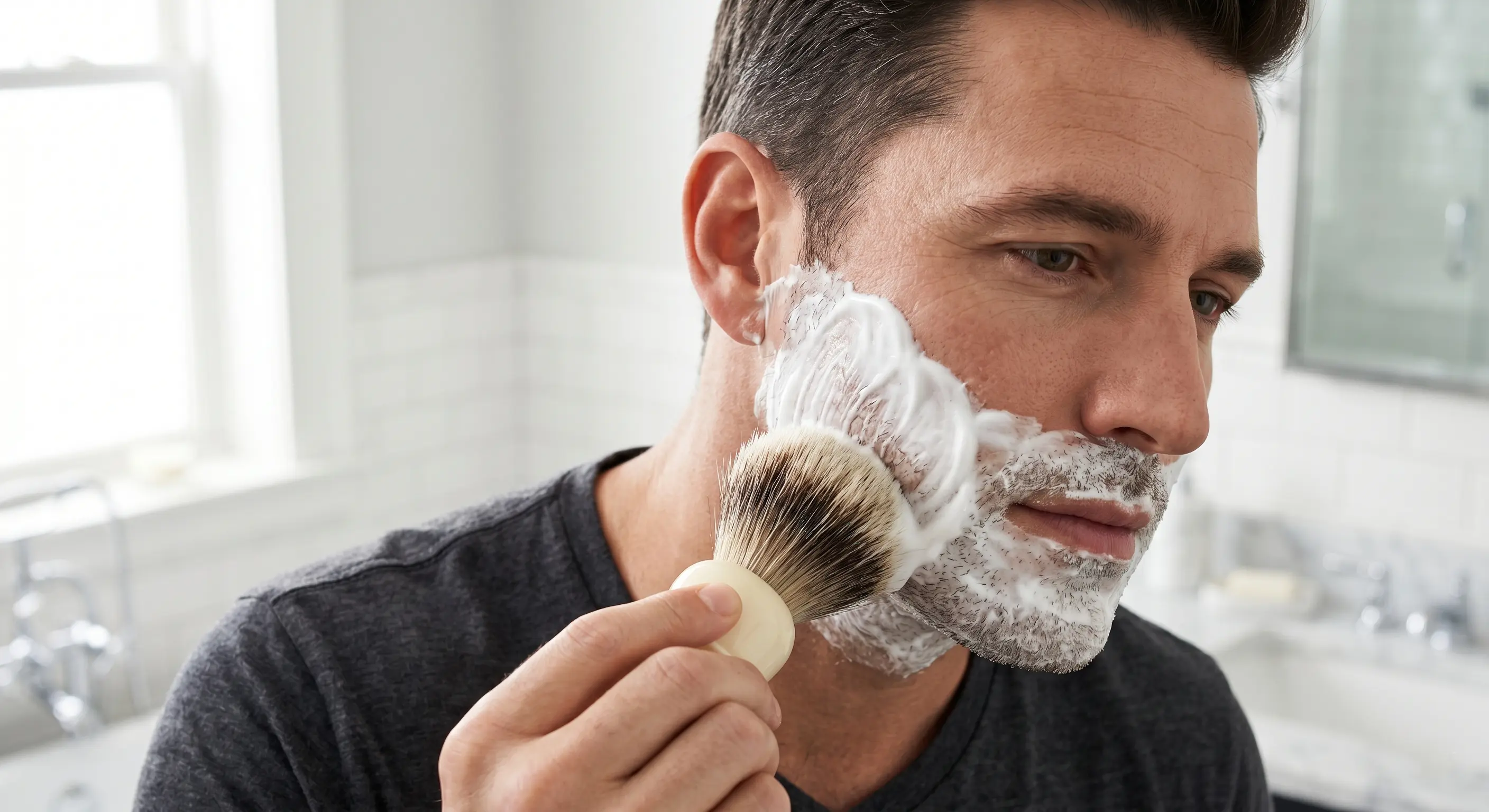
That's it. No new gear, no complex preparation. The entire process adds less than two minutes to your routine — most of which is the brush soak that was already part of the setup.
Once you experience the difference in lather quality, the process becomes automatic. Most shavers who adopt this method report that they would no more skip the citric acid step than they would skip rinsing the brush.
Common Shaving Brush Mistakes: Forum Habits vs. Water Science
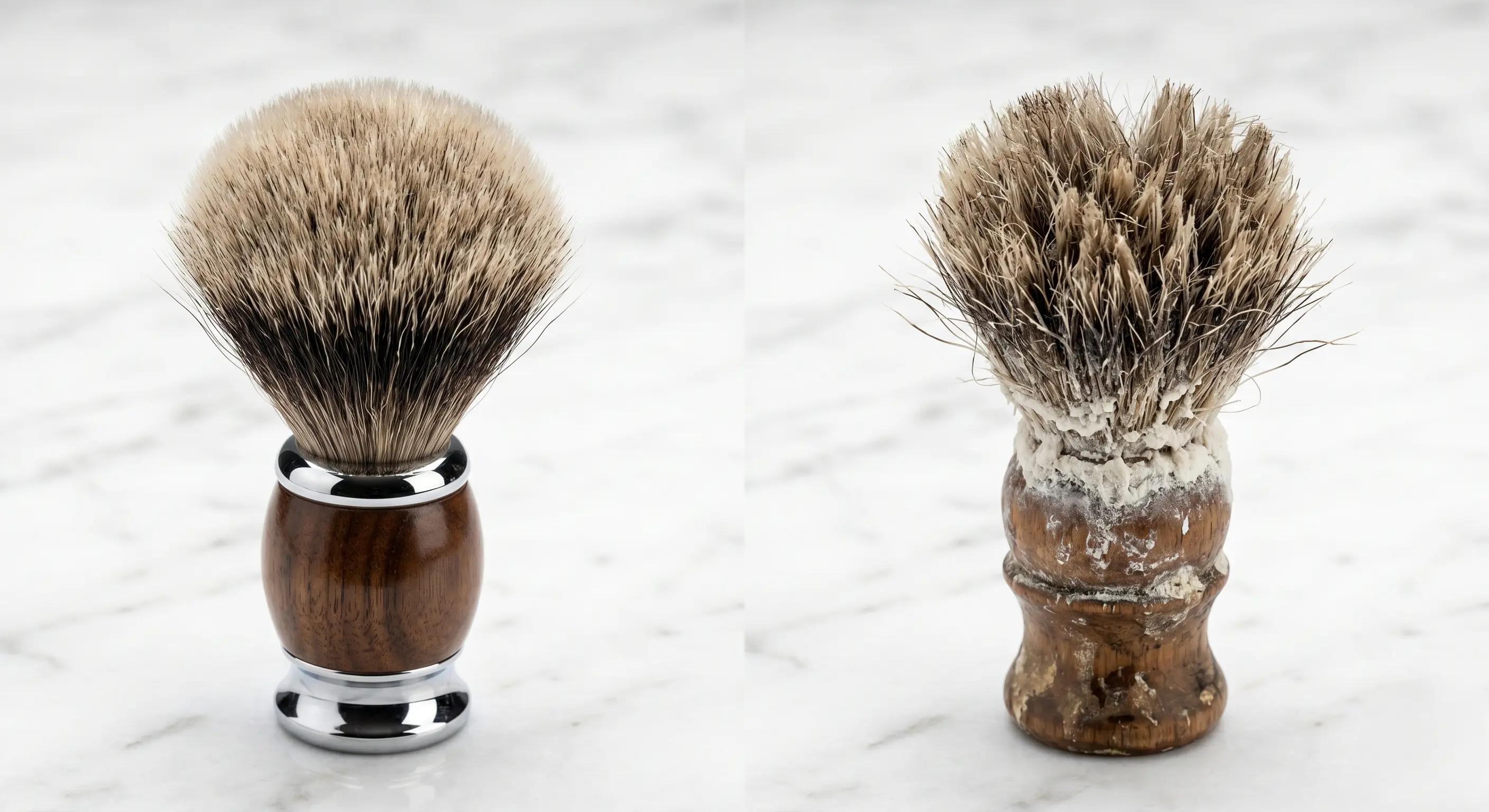
Understanding water chemistry changes how you think about your entire shaving setup — not just the lather. To understand how hard water and grooming habits interact with your equipment over time, we extracted real-world usage data from top-tier contributors on veteran shaving forums and cross-referenced it with water chemistry.
The result is a clear pattern: many of the most common brush problems — shedding, bristle breakage, persistent odor, gradual performance decline — trace directly back to hard water damage combined with specific user habits. Here is exactly what happens when forum habits meet scientific reality.
| What Wet-Shavers Do (Forum Insight) | The Scientific Consequence | The Expert Solution |
|---|---|---|
|
FORUM HABIT #1 Applying too much pressure while loading hard soaps. "I broke quite a few bristles when I put too much pressure while loading a hard soap. That was my mistake." |
Pressing the brush down forces intense friction on the lower section of the hair. This mechanical stress destroys the natural keratin structure, snapping the delicate bristles and creating a permanent hollow "donut hole" in the center of the wet knot. | Load the brush with light, swirling motions. Let the very tips of the natural fibers gently scrape the soap surface to build a pasty proto-lather. Never smash or splay the base of the knot against hard pucks. |
|
FORUM HABIT #2 Leaving soap residue deep inside the brush core. "Sometimes I didn't wash it out well... soap scum from deep within the knot is what causes breakage and shedding." |
Calcium and magnesium ions in hard water bond rapidly with fatty acids in shaving soap to form alkaline soap scum. This heavy crust hardens inside the tight base of the knot, suffocating the hairs and cutting into individual strands like miniature blades — triggering severe shedding. | Flush the brush thoroughly under warm running water after every single shave. To reverse existing damage, soak in a mild citric acid solution (⅓ tsp of citric acid dissolved in 150ml of warm water) every 6 months to dissolve the alkaline mineral crust. |
|
FORUM HABIT #3 Using harsh white vinegar to clean mineral buildup. "I'm looking for how to use citric acid solution to clean a brush because vinegar takes up too much space, and I don't really like the sour smell of it." |
Acetic acid (vinegar) successfully dissolves calcium, but its volatile organic sulfur compounds chemically bond with natural animal hair (badger or boar). This traps a persistent, sour odor that reactivates every time the brush gets wet and warm during your shave. | Switch completely to citric acid monohydrate. It is entirely odorless, highly efficient, and strips away mineral film cleanly without affecting the smell of the hair — costing pennies for hundreds of uses. |
|
FORUM HABIT #4 Obsessing over expensive hanging stands to dry the brush. "Wet shaving for decades and never had a brush wear out... I just rinse it, shake the excess water out, and let it dry, hair standing upright. Stands make no difference." |
Gravity plays a minimal role in drying a dense shaving knot. Capillary action naturally draws moisture outward toward the tips of the hairs regardless of orientation. Air circulation and room humidity matter far more than the physical angle of the handle. | Save your money on pricey stands. After rinsing, vigorously shake out all excess water, gently fluff the outer bristles on a dry towel to open up the knot, and store it standing flat on its base in an open, well-ventilated space. |
Frequently Asked Questions
No — and this is a common misunderstanding. Spring water is not soft water. Spring water is sourced from natural underground aquifers and specifically marketed for its mineral content, which typically includes the same calcium and magnesium ions that make tap water hard. You need distilled water (also sold as "purified water" — mineral content of 0 ppm), not spring water.
A small pinch — roughly ¼ teaspoon — dissolved in a bowl of shaving water is sufficient for most hard water conditions. Using more than ½ teaspoon in a small bowl can lower the pH of the water enough to cause mild skin irritation during the shave, particularly on sensitive skin. If you notice any tightness, redness, or stinging after shaving, reduce the amount at your next session. The goal is just enough citric acid to chelate the minerals, not to acidify the water significantly.
Yes — citric acid is safe for natural-hair brushes (badger, boar, horse) and synthetic brushes alike. Unlike vinegar, it has no volatile compounds that bond with natural hair fibers. It's also safe for all bowl materials including porcelain, wood, stainless steel, and plastic. The only caution is not to use a highly concentrated citric acid solution on metal razor handles with decorative plating, as prolonged exposure to any acid can affect certain finishes.
If maximum lather quality is the goal, combining both methods is ideal: use distilled water in the bowl and add a small pinch of citric acid as a backup chelating agent. In practice, most shavers find one method sufficient on its own once they've dialed in the right amount. The distilled water method is better for shavers who want the cleanest possible solution with zero variables. The citric acid method is better for shavers who want to use their existing tap water without changing their routine significantly.
Partially. Using distilled water or citric-acid-treated water for lather building means less mineral exposure during the shave itself. However, if you rinse your razor under tap water after each pass — as most people do — the blade is still coming into contact with hard water minerals. The mineral buildup that accumulates on blade edges between shaves is a separate problem that requires its own solution. For a full breakdown, see our dedicated article on whether hard water dulls razor blades faster.
The Bottom Line
Building perfect lather in hard water is a chemistry problem, not a technique problem. The distilled water method eliminates the problem at the source. The citric acid method neutralizes it inside your tap water. Both work, both are inexpensive, and either one will transform your shaving routine in a way that no new brush or soap ever could.
If you're ready to find a soap that works with these methods — or one whose formula already contains the chelating agents to handle hard water on its own — our full guide covers the best shaving creams and soaps for hard water with complete performance data, including which formulas contain Tetrasodium EDTA and which brands consistently perform best when your water is working against you.
And if hard water is already causing skin irritation after your shaves, the fix goes beyond the lather. Check out our guide to treating and preventing razor burn caused by hard water for a complete post-shave protocol built specifically for mineral-heavy water conditions.